Scandinavian Mythology: The Complete Guide to the Old Gods, the Living Folklore, and the Spirits of Forest and Farm
Scandinavian mythology is the only branch of European paganism that never fully died. The gods of Greece and Egypt became museum pieces the moment their temples closed, but in the farmhouses of Denmark, Norway, and Sweden, people were still leaving bowls of porridge out for a household spirit called the nisse within living memory, still warning their daughters away from the hollow-backed forest woman called the huldra, still afraid of the music a water-spirit played on summer nights. The mythology of Odin and Thor is only half the story; the other half stayed alive in the fields long after the gods were officially abandoned.
That is what makes the Scandinavian tradition distinct from its more famous sibling. “Norse mythology” usually means the high pantheon preserved in the medieval Icelandic Eddas — the Æsir and Vanir, Yggdrasil, Ragnarök. Scandinavian mythology is that same inheritance seen from the mainland, where it fused with centuries of peasant belief into something broader and stranger: a mythology not just of gods in a far-off Asgard but of the specific lake at the bottom of the valley, the burial mound in the home field, the wolverine in the northern forest. Every wood, water, and mountain had its warden, and you negotiated with all of them.
The sources are unusually layered. The poems of the Poetic Edda and Snorri Sturluson’s Prose Edda give us the mythological core; the Danish cleric Saxo Grammaticus, writing his Gesta Danorum around 1200, gives us the same gods rewritten as ancient kings — including a Danish prince named Amleth whom Shakespeare would later turn into Hamlet. And the vast nineteenth-century collections of folklorists preserve the living oral tradition. This guide moves through all of it: the gods, the monsters, the central myths, the many afterlives, and the folklore that the people of the North half-believed into the modern age.
What Makes Scandinavian Mythology Different
The folklore outlived the religion by a thousand years. Scandinavia converted to Christianity around the 11th century, and the worship of the old gods ended. But the lesser supernatural world — the household tomte, the forest skogsrå, the river-dwelling nøkk — slipped beneath the new faith and kept going. Farmers who took communion on Sunday still left offerings in the barn on Thursday. This is a mythology you can trace in unbroken practice from the Viking Age to the era of photography.
It comes to us in two warring versions. The Icelandic Eddas treat the gods as gods. The Danish historian Saxo Grammaticus treats them as flesh-and-blood kings and sorcerers — he turns Freyr into a ruler called Frothi, Balder into the warrior Balderus, and the sea-god Njord into a human hero named Hadingus. The same myth survives in two incompatible keys, divine and historical, and the gap between them is one of the most fascinating problems in the field.
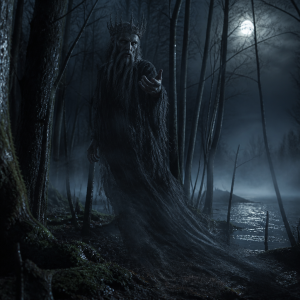
The land itself is alive and must be bargained with. The single most distinctive Scandinavian idea is the rå — a warden or “keeper” attached to every feature of the wild. The skogsrå rules the forest, the sjörå the lakes, the bergsrå the mountains, and the vættir inhabit the land itself. You did not simply walk into nature; you entered someone’s domain, and there were rules. Hunt respectfully and the skogsrå filled your traps; foul her forest and you got lost in it forever.
The dead are physical, and they stay close. Scandinavian ghosts are not vapor. The draugr is a heavy, swollen, animated corpse that has to be wrestled and beheaded; the haugbúi sits in his grave mound guarding his treasure. The burial mounds dotting the Scandinavian countryside were not memorials but occupied addresses, and the line between a dead ancestor and a hostile monster was thin and negotiable.
It is regional, not a single canon. There is no orthodox Scandinavian mythology — there are Danish, Norwegian, Swedish, and Icelandic variants of the same beings, often under different names. The same water-spirit is the nøkk in Norway, the näck in Sweden, and the fossegrim at the waterfall. The mythology is a family of dialects, not a scripture.
The Gods
The high gods of Scandinavia are the Norse pantheon, divided into two divine families who fought the first war in the world before fusing into one court: the warlike Æsir and the fertility-bringing Vanir.
The Æsir
Odin — the All-Father, god of wisdom, poetry, frenzy, war, and death. He gave an eye for a drink from the well of wisdom and hanged himself nine nights on Yggdrasil, pierced by his own spear, to seize the runes. His ravens Huginn and Muninn scout the world each day, and he rides the eight-legged horse Sleipnir.
Thor — the red-bearded thunder god, defender of gods and humans against the giants, swinging his hammer Mjölnir. He was the most widely worshipped god in everyday Scandinavia, the one whose name fills place-names and amulets, and the one the common farmer actually prayed to.
Tyr — the one-handed god of law, justice, and sworn oaths. He alone was brave enough to place his hand in the wolf Fenrir‘s mouth as a pledge while the gods bound the beast — and he lost it, knowingly, the price of a promise kept.
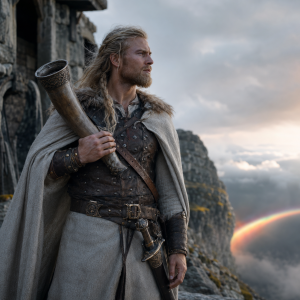
Heimdallr — the shining watchman of the gods, who needs less sleep than a bird, sees a hundred leagues by day or night, and can hear wool growing on a sheep’s back. His horn will sound the alarm that begins the end of the world. In the poem Rígsþula he wanders the earth as “Ríg” and fathers the social classes of humankind.
Balder — the radiant, beloved son of Odin, so fair that light seemed to pour from him. His death is the great wound of the mythology, the moment the gods first learn that even they can lose what they love. In Saxo’s Danish version he is recast as a half-divine warrior locked in a love-rivalry over a princess named Nanna.
Loki — the trickster bound to the Æsir by blood-oath, shape-shifter and problem-maker, helpful and catastrophic by turns. He is the father of monsters — of Fenrir, of the world-serpent Jörmungandr, and of Hel — and the engineer of Balder’s death, for which the gods chain him beneath a venom-dripping serpent until the end of days.
The Vanir
Freyja — goddess of love, fertility, gold, war, and the trance-magic called seiðr. She claims half of all who die in battle for her hall Fólkvangr, a right even Odin honors, and rides in a chariot pulled by two great cats — an image no other European pantheon offers.
Freyr — Freyja’s brother and the great god of fertility, sunshine, rain, and good harvests, whose phallic idol at Uppsala in Sweden was famous. Swedish and Norwegian royal lines claimed descent from him, and he gave away his magic sword for love of the giantess Gerðr — a bargain that will leave him weaponless and doomed at Ragnarök.
Njord — god of the sea, wind, fishing, and wealth, father of Freyja and Freyr. His brief, mismatched marriage to the ski-and-mountain goddess Skaði — she could not sleep for his crying gulls, he could not bear her howling wolves — is one of the tradition’s sharpest portraits of incompatible love. Saxo would remember him only as the human king Hadingus.
Jörð — the personified Earth, a giantess and consort of Odin, and the mother of Thor. Máni steers the moon through the sky, eternally pursued by a wolf, while Rán, goddess of the sea’s depths, drags drowning sailors down into her net and keeps them in her hall beneath the waves.
Creatures, Monsters, and the Hidden Folk
The Scandinavian bestiary runs from cosmic monsters that will end the world to the small, sly beings who shared the farm. The high mythology supplies the giants and dragons; the folk tradition supplies the trolls, the nature-wardens, and the restless dead — and it is the second group that makes the tradition unique.
Giants and Cosmic Beasts
Jötunn — the giants, the great rival race of the gods, embodiments of chaos, frost, mountain, and sea. They include the hrímþursar (frost-giants) and the bergrisar (mountain-giants), and from them the gods themselves are partly descended.
Ymir — the first being, the primordial frost-giant from whose murdered body the gods built the world: his flesh the earth, his blood the sea, his skull the dome of the sky.
Fenrir — the monstrous wolf, child of Loki, bound by a ribbon the dwarves forged from impossible things. At Ragnarök he breaks loose and swallows Odin. His mother is the giantess Angrboða, “she who brings grief,” who bore Loki’s brood of monsters.
Jörmungandr — the World Serpent, coiled around the whole earth biting its own tail, Thor’s destined killer and victim. Níðhöggr gnaws the roots of Yggdrasil from below, trading insults carried up and down the trunk by the squirrel Ratatoskr. Surtr, the fire-giant, will burn the cosmos at the end, and the hound Garmr bays at the gates of the dead while Sköll runs down the sun.
Fafnir — the man turned by greed into a venom-breathing dragon, slain by the hero Sigurd from a pit. The lindworm, a serpentine wingless dragon, slithers through later Scandinavian legend and heraldry, and the island-sized kraken and the deceptive whale-island lyngbakr rise from genuine sailors’ dread off the northern coasts.
Trolls, Elves, and the Hidden People
Trolls — the large, ugly, dangerous dwellers of cliff and highland, sometimes blurring into the giants. Caught by sunrise, a troll turns to stone, which is why Scandinavians point at certain rock stacks and name them for trolls petrified at dawn.
Huldra — the beautiful forest woman, lovely from the front but hollow as a rotten log behind, with a cow’s tail she tries to hide. One Norwegian origin tale calls the hidden folk the children Eve hid from God, condemned to stay unseen forever. She seduces lonely herders in the mountain pastures — marry her in church and the tail drops off; betray her and she is merciless.
Huldufólk — the “hidden people,” the elf-like race who live inside stones and hillsides, a belief strongest in Iceland but shared across the North. The elves proper split in the old texts into the light ljósálfar and the dark dökkálfar, while the underground smith-folk are the dvergr, the dwarves who forged the gods’ greatest treasures.
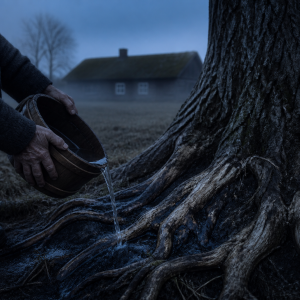
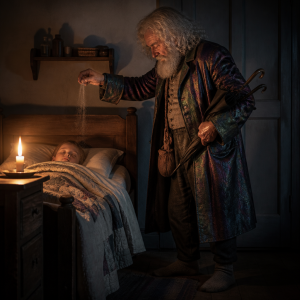
Nisse and Tomte — the small, bearded household guardian, one of the most beloved figures in the entire tradition. He tends the farm and livestock by night in exchange for a bowl of buttered porridge at Yule; forget the butter, or treat him with disrespect, and he turns from helper to vengeful prankster. He is the direct ancestor of the modern Scandinavian Christmas gnome.
Wardens of the Wild — the Rå
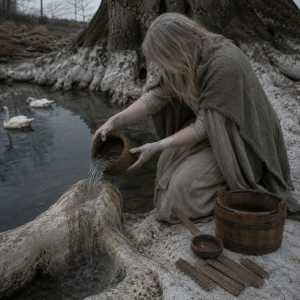
Rå — the “keeper,” the guardian spirit of a place, and the organizing idea of Scandinavian nature-belief. Every domain had one. The skogsrå rules the forest and game, the sjörå the lakes, the havsrå the open sea, and the bergsrå the mountains and mines. To deal with them was a constant low-level diplomacy of offerings and taboos. The rådande are their close kin, presiding spirits of particular spots.
Vættir — the “wights,” the land-spirits of Scandinavian belief, of whom the landvættir guard the land and the sjóvættir the waters. Viking ships removed their carved dragon-heads when approaching home so as not to frighten the friendly land-wights. The English wight is the same word and idea.
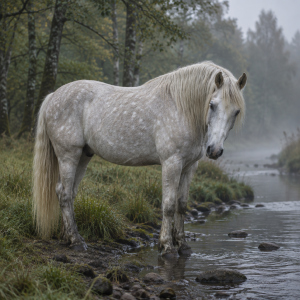
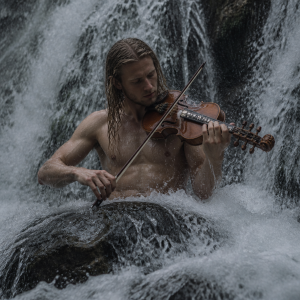
Nøkken — the shape-shifting water-spirit who plays heartbreakingly beautiful music on his fiddle to lure people into deep water and drown them. He is the neck or näck across the region, related to the nix, and at the waterfall he becomes the fossegrim, who will teach his music to anyone bold enough to bring him a stolen offering. The marmennill is the Scandinavian merman, an omen-giver hauled up in fishing nets.
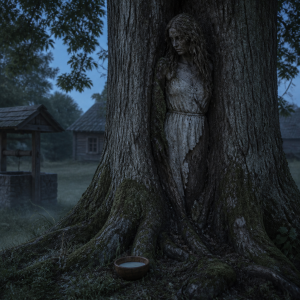
Askafroa — the “ash-tree wife,” a genuinely obscure being: the spirit of the ash, dangerous and easily offended, to whom Swedish peasants made offerings on Ash Wednesday morning so she would not send harm. She is exactly the kind of hyper-local nature-spirit an overview of “Norse mythology” never reaches.
The Restless Dead and Personal Spirits
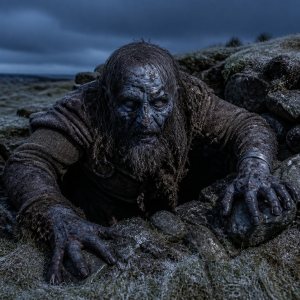
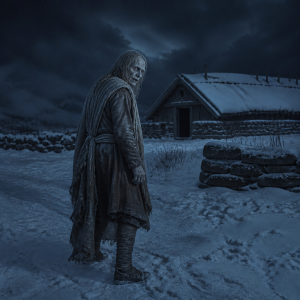
Draugr — the signature monster of the North, the animated corpse: swollen, corpse-blue or death-pale, immensely strong, sometimes able to grow to giant size, shape-shift, or control the weather. It guards its grave goods or simply torments the living. You stop one by wrestling it down, cutting off its head, and burning the body. The haugbúi is its stay-at-home cousin, a corpse that never leaves its burial mound.
Gjenganger — the Norwegian and Danish revenant, the “again-walker” who returns from the grave, often someone murdered or improperly buried, spreading disease and dread. The myling is the harrowing ghost of an unbaptized child, abandoned and unburied, who chases travellers demanding to be carried to consecrated ground.
Fylgja — a uniquely Norse idea: a personal attendant spirit, often appearing as an animal that embodies your character or as a woman bound to your family line, seen only at moments of crisis or death. The hamingja is the closely linked spirit of a person’s luck, which could even be inherited. The vardøger is the eerie “fore-runner” — your spirit arriving somewhere, with footsteps and the sound of the door, minutes before you do in the flesh.
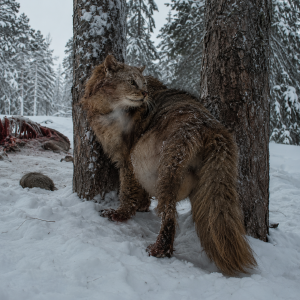
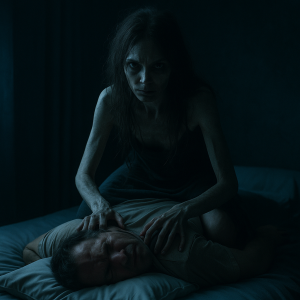
Mara — the night-demon that crouches on a sleeper’s chest and brings crushing dreams, the root of the word “nightmare.” The valravn — the “slaughter-raven” that feeds on the battlefield dead and can take half-human form — and the jerff, the ravenous wolverine of northern legend (also called the gulon), round out a roster of beings no generic summary would catch. The mock-creature skvader and the weather-witch Ysätters-Kajsa show how playful and how local the tradition could get.
The Central Myths
The Making of the World from a Giant’s Body
In the beginning there was only the void Ginnungagap, with fire to the south and ice to the north. Where they met, the frost-giant Ymir formed, and beside him the cow Auðumla, who licked the first god free from the salty ice. Ymir’s descendants multiplied, until Odin and his brothers killed him and built the world from his corpse: earth from flesh, mountains from bone, sea and lakes from blood, the sky from his skull, and the clouds from his brains. Why it matters: the cosmos is literally made of a murdered giant’s body — a creation that is also a killing, setting the violent, doom-shadowed tone of the whole mythology. The world is built on a death, and it will end in one.
Tyr’s Hand and the Binding of Fenrir
The wolf Fenrir grew so fast and so terribly that the gods knew he would destroy them. Twice they tried to chain him with ordinary fetters and twice he snapped them, so they had the dwarves forge Gleipnir, a ribbon as soft as silk but unbreakable, made of impossible things — a cat’s footfall, a woman’s beard, the roots of a mountain. Fenrir, suspecting a trick, agreed to be bound only if a god would lay a hand in his jaws as a pledge of good faith. Only Tyr stepped forward. When the wolf found he could not break free, he bit the hand off. Why it matters: Tyr knew the cost and paid it anyway. It is the tradition’s purest image of honour — courage measured not by what you win but by what you are willing to lose to keep your word.
The Death of Balder
The radiant Balder dreamed of his own death, so his mother Frigg made every thing in the world swear never to harm him — every thing except the mistletoe, too young to bother with. The gods amused themselves by throwing weapons at the invulnerable Balder, until Loki, learning of the one omission, fashioned a mistletoe dart and guided the blind god Höðr’s hand to throw it. Balder fell dead, and the gods’ messenger rode to Hel to beg his return; Hel agreed, if every being in the world would weep for him. All did — except one giantess, Loki in disguise, and so Balder stayed among the dead. Why it matters: this is the hinge of the cosmos. Balder’s death proves the gods are mortal, breaks the peace of Asgard forever, and starts the countdown to Ragnarök — the first loss in a story that becomes all loss.
Ragnarök, the Doom of the Gods
The end is foretold from the beginning. After a great winter and the breakdown of all bonds, the bound monsters break loose: Fenrir swallows Odin, Thor and the World Serpent Jörmungandr kill each other, the fire-giant Surtr burns the nine worlds, and the earth sinks into the sea. Yet a green world rises again from the water, a few gods survive, and two humans who sheltered in Yggdrasil repopulate it. Why it matters: Scandinavian myth is almost unique in damning its own gods. They go to their deaths knowing they will lose, and fight anyway. The genius of Ragnarök is that it is both an ending and a renewal — a worldview that stares straight at doom and refuses to despair.
The Afterlife and the Shape of the Cosmos
The cosmos hangs on Yggdrasil, the immense ash whose branches roof the heavens and whose three roots reach the realm of the gods, the giants, and the dead. Among its nine worlds turn the courts of the Æsir, the homes of elves and dwarves, the giant-lands, and the icy underworld. The three Norns — chief among them Urd, “what has become” — sit at its base, watering the root and carving the fates of gods and men.
What sets Scandinavian belief apart is that there was no single afterlife. Where you went depended on how you died and who claimed you. Warriors chosen by the Valkyries went to Odin’s hall to become the einherjar, feasting and fighting in preparation for Ragnarök; Freyja claimed half the battle-slain for her own field. The drowned went down to Rán‘s hall beneath the waves. Most of the dead went to Hel, the cold and quiet realm of those who died of sickness or age — not a punishment, simply the default.
But folk belief added a fourth answer that the textbooks miss: the dead often did not go anywhere at all. They stayed in the burial mound. The haugbúi living on in his howe, the draugr climbing out of his to trouble the farm — these reflect a belief that the dead remained physically present in the landscape, ancestors and threats at once. Proper burial mattered enormously, because a body sent off wrong came back wrong. In Scandinavia, death did not necessarily mean departure.
How Scandinavian Mythology Connects to Other Traditions
Scandinavian mythology is the mainland branch of the same tree as Norse mythology, which preserves the high pantheon in its fullest Icelandic form, and the closely related Icelandic tradition that actually wrote the myths down. Read alongside each other, the three show one inheritance from three angles: the gods (Norse), the texts (Icelandic), and the living folklore (Scandinavian).
It is also a regional branch of the wider Germanic world. Odin is the northern Woden; Tyr is cognate with an older sky-god whose name survives in “Tuesday.” The continental Germanic peoples worshipped earlier versions of the same gods, and the Roman historian Tacitus described their rites centuries before the Eddas were written.
Its most interesting neighbour is the non-Germanic Finnish tradition next door, with its own utterly different pantheon and its epic the Kalevala; centuries of contact mean each borrowed motifs from the other, especially in the far north among the Sami. And within the Scandinavian sphere itself, the Swedish folklore of forest-rå and underground folk gives the tradition some of its most vivid and best-documented local color.
Where to Start Reading
Begin with the two Eddas, the bedrock of everything. The Poetic Edda — a collection of anonymous mythological and heroic poems surviving in a single Icelandic manuscript — gives you the raw, strange voice of the myths; Carolyne Larrington’s translation is the standard modern entry point. Snorri Sturluson’s Prose Edda (c. 1220), written as a handbook for poets, is the single most readable retelling of the whole mythology and the source of much of what we know. For the distinctively Scandinavian, mainland view, Saxo Grammaticus’s Gesta Danorum (c. 1200) presents the gods as Danish kings and preserves variants found nowhere else, including the original of Hamlet.
For modern introductions, Kevin Crossley-Holland’s The Norse Myths is the classic literary retelling; H. R. Ellis Davidson’s Gods and Myths of Northern Europe remains the best scholarly overview of the wider Northern tradition; and for the living folklore specifically, the great nineteenth-century collections of Asbjørnsen and Moe (Norway) and the folklorists of Sweden and Denmark are where the nisse, the huldra, and the nøkk were finally written down.
Explore Scandinavian Mythology on Gods and Monsters
Our dedicated Scandinavian Mythology collection holds 5 core entries, part of a much larger library spanning the whole Norse and Nordic world — hundreds of gods, monsters, folk-spirits, and heroes across the Scandinavian sphere.
Browse all Scandinavian Mythology entries →
Odin · Thor · Freyja · Freyr · Loki · Heimdallr · Tyr · Balder · Fenrir · Jörmungandr · Yggdrasil · Nisse · Tomte · Huldra · Skogsrå · Nøkken · Rå · Draugr · Haugbúi · Vættir · Troll · Valkyrie · Fylgja · Askafroa
Frequently Asked Questions
What is the difference between Norse and Scandinavian mythology?
They overlap almost entirely, but the emphasis differs. “Norse mythology” usually refers to the pre-Christian religion of the high gods — Odin, Thor, the Æsir — as preserved in the medieval Icelandic Eddas. “Scandinavian mythology” is the broader living tradition of Denmark, Norway, and Sweden, which includes those gods but extends into centuries of folk belief: the household tomte, the forest skogsrå, the water-dwelling nøkk, and the restless dead. Norse is the pantheon; Scandinavian is the pantheon plus everything the common people went on believing for a thousand years after.
Who are the main Scandinavian gods?
The chief gods are Odin, the all-father of wisdom and war; Thor, the thunder god and the most widely worshipped; Freyja and her brother Freyr, the fertility deities of the Vanir; Tyr, god of law and sacrifice; Heimdallr, the watchman; Balder, the radiant and doomed; and the trickster Loki. In Sweden, Freyr was especially central; in everyday rural worship, Thor was the people’s god.
What is a nisse or tomte?
A nisse (Danish and Norwegian) or tomte (Swedish) is a small, bearded household spirit who guards a farm and its animals. He works invisibly by night and asks only for respect and a bowl of porridge — traditionally with a generous lump of butter — at Yule. Offend him, skimp on the butter, or mistreat the livestock, and the helpful little guardian turns into a spiteful trickster who tangles the horses’ manes and sours the milk. He is the direct ancestor of the red-capped Scandinavian Christmas gnome sold today.
Are draugr the same as zombies?
They are closer to zombies than to ghosts, but stronger and smarter. A draugr is a physical, reanimated corpse — heavy, swollen, corpse-blue, immensely powerful — not a transparent spirit. Unlike a shambling movie zombie, it often retains cunning and can grow to giant size, shape-shift, control the weather, or foretell the future. It guards the treasure in its grave mound or comes out to torment the living, and the only sure way to stop one is to wrestle it down, behead it, and burn the body so it cannot return.
What is the huldra?
The huldra is a forest spirit appearing as a stunningly beautiful woman — but seen from behind she has a cow’s tail and a back as hollow as a rotted tree. She belongs to the “hidden people” (one Norwegian tale calls them the children Eve concealed from God) and haunts the mountain pastures where herders spent the summer. She can be a generous lover or a deadly one: a man who marries her in church may free her of the tail and gain a faithful wife, but a man who shames her pays dearly. She is the Norwegian face of the same spirit the Swedes call the skogsrå.
Did Scandinavians really believe in these creatures?
For most of history, yes — and far longer than for most mythologies. After the conversion to Christianity around the 11th century, belief in the high gods faded, but belief in the smaller beings persisted in rural Scandinavia into the 19th and even 20th centuries. Farm families genuinely left out food for the tomte, avoided the lakes where the nøkk played, and feared the draugr in the burial mound. In Iceland, belief in the hidden people still measurably survives. This unbroken continuity is exactly what makes the Scandinavian tradition unique: it is a mythology that was lived, not merely remembered.