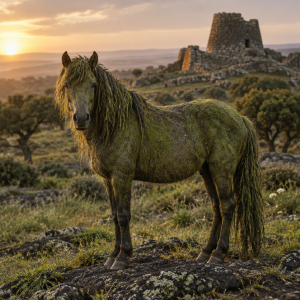
Distinguishing Characteristics of Sardinian Mythology
Sardinian mythology, rooted in the ancient Nuragic civilization, is distinguished by its blend of indigenous beliefs and external influences from Phoenician, Greek, and Roman cultures. This syncretism resulted in a mythology that is deeply connected to the natural and spiritual world, with a strong emphasis on the worship of natural elements, such as water, stones, and celestial bodies. Unlike the more systematized pantheons of Greece and Rome, Sardinian deities and spirits often lack detailed mythologies, embodying instead the raw, elemental forces of nature and the concerns of daily life, such as fertility, protection, and the afterlife.
Major Gods
In the pantheon of Sardinian mythology, there aren’t gods in the classical sense but rather spirits and deified natural forces. Janas, for example, are fairy-like beings believed to dwell in the giant tombs scattered across the island, serving as guardians of the dead and weavers of fate. Another significant figure is Sardus, a mythical hero often associated with the Nuragic civilization’s foundation and sometimes considered a god-like figure, embodying the spirit of the Sardinian people and their land.
Major Mythological Beasts
Mythological beasts in Sardinian lore often stem from prehistoric and natural elements. The Cogas, for example, are witch-like figures believed to possess the power to curse and heal, embodying the dual nature of magic. Additionally, spirits that guard sacred places, and water beings that inhabit wells and springs, reflect the deep connection between the Nuragic people and their environment, highlighting a world where every element is imbued with spiritual significance.
Major Mythological Tales
Tales within Sardinian mythology often center around themes of protection, fertility, and the cycle of life and death. One of the most enduring legends is that of the Nuragic heroes, warriors who protected their communities and were believed to have magical powers. Another tale involves the water spirits, who would ensure the fertility of the land and the well-being of the people, provided they were respected and properly appeased.
Impact on Modern Civilization
Sardinian mythology, though not as widely recognized as other mythologies, has left a subtle but indelible mark on modern civilization, particularly in the realm of cultural identity and heritage. The ancient rituals, beliefs, and symbols have been woven into the fabric of Sardinian culture, influencing art, literature, and even contemporary spiritual practices. Moreover, the emphasis on harmony with nature and the spiritual value of the land presage modern ecological and environmental movements, showcasing how ancient wisdom can inform current perspectives on living sustainably.