Romanian Mythology: The Complete Guide to Dacian Gods, the Living Dead, and the Fairies of the Carpathians
Romanian mythology is the only major European tradition where the word for “fairy” and the word for “vampire” sit at opposite ends of the same belief system — and where both are still half-believed in mountain villages today. Strip away the Hollywood Dracula and what remains is far stranger: a people who once believed death itself was a lie, whose ancestors sent human messengers to a god by hurling them onto upright spears, and whose folklore preserves a wolf-cult older than Rome.
What makes this tradition distinctive is that it has two layers fused into one. Underneath lies the religion of the Dacians and Getae, the Thracian peoples who ruled the Carpathian basin before Trajan’s legions conquered them in 106 CE. Their chief god, Zalmoxis, taught that the soul never dies — a doctrine so striking that Greek writers from Herodotus onward couldn’t decide whether he was a god, a prophet, or a fraud. On top of that ancient stratum sits a thick layer of medieval Romanian peasant folklore: shape-shifting undead, weather-controlling sorcerers, forest mothers, and dancing fairies who can paralyze a man for life. Romanian Orthodoxy never erased these beings; it simply gave them feast days.
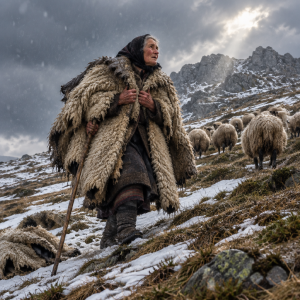
The primary sources are unusual too. There is no Romanian Iliad or Edda. Instead the mythology survives in oral ballads like Miorița, in the seventeenth-century writings of the scholar-prince Dimitrie Cantemir, and in the vast field collections of nineteenth-century folklorists. Because so much was recorded from living peasant practice rather than ancient scripture, Romanian myth often feels less like a closed book than an open one — a tradition that was still breathing when ethnographers showed up with notebooks.
What Makes Romanian Mythology Different
Death was denied outright, not just survived. Most afterlife beliefs promise that something continues after you die. The Getae went further: according to Herodotus, they “believe they do not die,” holding that the one who passes simply goes to Zalmoxis. This is one of the most radical immortality doctrines recorded in the ancient world, and it shaped everything from Dacian fearlessness in battle to the elaborate undead lore that came later.
The undead come in graded tiers. Romanian folklore does not have a single “vampire.” It has a whole taxonomy: the Moroi, a mortal half-living revenant; the Strigoi, the true risen dead who drain vitality; and the Pricolici, the corpse of a violent man returned as a wolf. The English word “vampire” flattens distinctions that Romanian peasants kept carefully separate, with different causes, signs, and remedies for each.
Wizards rode dragons through the storm. The Solomonari were not evil sorcerers in a fairy tale — they were a feared, quasi-real order of weather-magicians believed to study in an underground school, ride the Balaur dragons across the sky, and summon hail to punish villages that refused them bread. Belief in them persisted into the modern era as an explanation for sudden destructive storms.
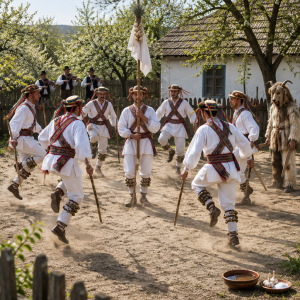
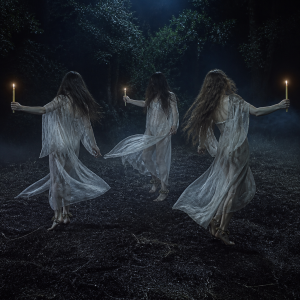
Fairies are beautiful and they will ruin you. The Iele are not winged sprites. They are gorgeous, invisible-by-day spirits whose nocturnal circle-dances scorch the grass and whose displeasure inflicts paralysis, madness, or muteness on anyone who sees them or steps where they danced. Romanian folk medicine even named a healing dance, the călușari, specifically to cure the affliction the Iele caused.
Christianity didn’t replace the old beings — it scheduled them. The fairy festival of the Sânziene shares its date with the feast of St. John the Baptist on June 24. The undead are most active on St. Andrew’s Eve and St. George’s Eve. Romanian Orthodoxy absorbed the pagan calendar wholesale, producing a folk religion where saints and strigoi share the same nights.
The Dacian Gods
The Supreme Deity and the Sky
Zalmoxis — the supreme god of the Getae and Dacians, lord of immortality and the underworld. Herodotus relates that he had once been a man, a former slave of Pythagoras, who taught his people that neither he nor his followers would ever truly die before withdrawing into a hidden underground chamber for three years and returning as if from the dead. Whether reformer, priest, or god, he became the spiritual anchor of an entire civilization and a modern emblem of Romanian continuity.
Gebeleizis — the Dacian god of thunder, lightning, and the storm-bright sky, sometimes identified with Zalmoxis and sometimes set against him as a separate power. The Getae were said to shoot arrows at the clouds during thunderstorms, threatening the sky-god himself. Depicted as a handsome man, occasionally accompanied by an eagle and a thunderbolt, he is the Dacian cousin of Zeus and Perun.
Beyond these two, the Dacian pantheon included figures the site has yet to cover: Bendis, a goddess of the moon, forests, and witchcraft whose cult was popular enough to reach Athens; and Derzelas (Darzalas), a god of health, abundance, and the vital force of the soul. Their names survive mainly in inscriptions and Greek reports, fragments of a religion the Romans worked hard to erase.
Creatures, Monsters, and the Living Dead
The Many Kinds of Undead
Strigoi — the true Romanian undead, the troubled soul of a dead person risen from the grave to torment the living and drain their vitality. A strigoi could shape-shift into an animal, turn invisible, and was believed to attack its own surviving family first. The remedies — exhuming, staking, and burning the corpse — were practiced in Romanian villages into the twentieth century and are the direct ancestor of the literary vampire.
Moroi — a lesser, often living or mortal vampire, distinguished from the immortal strigoi. The moroi was thought to arise from the souls of unbaptized children, the stillborn, or the faithless dead, and to leave the grave to sap the energy of the living. In some accounts a moroi that goes long enough undetected eventually “graduates” into a full strigoi.
Vârcolac — a creature of darkness whose name covers two ideas at once: a werewolf-like being and, more dramatically, the cosmic beast that devours the sun and moon to cause eclipses. When the sky darkened, Romanian peasants believed the vârcolaci had climbed into the heavens to swallow the lights, and that the spinning of unblessed thread could send them there.
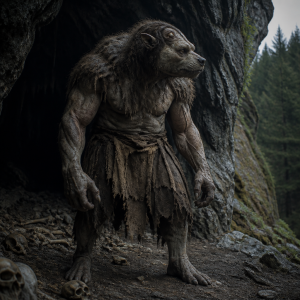
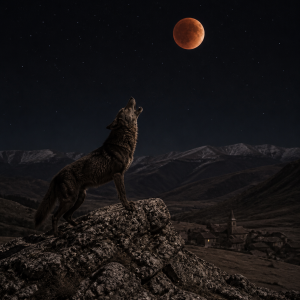
Pricolici — the undead wolf, the risen corpse of a particularly violent or murderous man returned in lupine form to attack travelers. Where the strigoi is a vampire, the pricolici is a Romanian fusion of werewolf and revenant — proof that in Romanian thought the boundary between the wolf and the undead was always thin.
Dragons, Giants, and Forest Things
Balaur — the great Romanian dragon: an enormous, finned, many-headed serpent with three, seven, or even twelve heads. The balaur is the standard adversary of fairy-tale heroes, the captor of princesses, and the mount of the Solomonari sorcerers, who were said to bridle it and ride it through the storm clouds. It embodies raw chaos that the hero must overcome.
Căpcăun — a monstrous ogre of Romanian fairy tales, often described with a dog’s or several heads, who kidnaps princesses and devours human flesh. The name likely derives from words meaning “dog-head,” and the căpcăun functions as the brute antagonist a hero must outwit and slay to complete his quest.
Uriaș — the giants of Romanian legend, a vanished race of enormous beings believed to have inhabited the land before humans. Folk tradition attributed ancient ruins, oversized bones, and strange earthworks to the uriași, imagining them as the original, doomed inhabitants of the Carpathians.
Muma Pădurii — literally “the Mother of the Forest,” a hideous, often mad old woman who haunts the deep woods. She is the dark mirror of the benevolent fairy: she steals or torments children, causes nightmares, and embodies the genuine danger of the Carpathian wilderness. In healing charms, villagers tried to bargain children’s illnesses back to her.
Spiriduş — a small household or familiar spirit, a Romanian imp that can serve a person who hatches it from a special egg, bringing wealth and luck at the price of the owner’s soul. A folkloric creature an AI summary of “Romanian monsters” would almost always miss, the spiriduș sits at the domestic, everyday end of the supernatural spectrum.
Spirits, Fairies, and Sorcerers
The Fairy Beings
Iele — the most feared of Romanian fairies: beautiful, ethereal, white-clad women who dance in nocturnal circles in forest clearings and mountain meadows. Their dancing-grounds are left scorched and barren, and to watch them, hear their song, or trespass where they danced is to risk paralysis, twisted limbs, madness, or sudden muteness. They are revered and dreaded in equal measure.
Zână — the benevolent fairy, the Romanian counterpart of the fairy godmother or the Greek Charites. Zâne live in the woods, bless newborns in the womb with gifts of beauty, kindness, grace, and luck, and aid heroes on their quests. But they share the temper of all Romanian fairies: slight a zână and her blessing becomes a curse. The very word descends from the Roman goddess Diana.
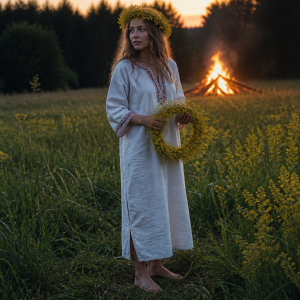
Sânziană — both a gentle summer fairy and the midsummer festival held in her honor on June 23–24, the Romanian solstice celebration. Called the “sister of the Sun,” she is associated with the yellow bedstraw flower (Galium verum) that maidens gather and weave into crowns. On Sânziene night the heavens are said to open and the fairies bless the fields — but those who anger them on this night pay dearly.
Vâlvă — a guardian spirit of places and elements, appearing as the protective genius of a mine, a field, a storm, or a treasure. Benevolent vâlve guard the wealth of the mountains; malevolent ones, often linked to storms and hail, war against one another in the sky. They personify the idea that every place and force has its own watching spirit.
Vântoase — the spirits of the whirlwind, female beings who travel inside dust-devils and sudden gusts. Closely related to the Iele, the vântoase were blamed for the spinning columns of wind that crossed summer fields, and people made the sign of the cross or threw a knife into the whirlwind to drive them off.
Zburător — the “flying one,” a demon-lover or incubus who visits women in their sleep as a handsome young man, particularly the newly married. First described in writing by Dimitrie Cantemir in his Descriptio Moldaviae (1714–1716), the zburător explained the longing, restlessness, and lovesickness of young women as the work of a nocturnal spirit — and became one of the four foundational myths of Romanian literature.
The Weather-Wizards
Solomonari — wizard-like masters of the weather, believed to have trained in a hidden underground academy, the Scholomance, where the devil himself taught the secrets of the storm. They rode balaur dragons through the clouds, commanded hail and lightning, and wandered as beggars who would loose a devastating storm on any community that denied them charity. Bram Stoker borrowed their school for Dracula.
The Central Myths
Miorița (The Little Ewe)
Romania’s most famous ballad tells of three shepherds, two of whom plot to murder the third and steal his flock. The doomed shepherd’s favorite ewe, gifted with speech, warns him — but instead of fleeing or fighting, he calmly asks her, if he is killed, to tell the others he has married a princess, with the sun and moon as wedding witnesses and the mountains as his church. He reframes his own murder as a cosmic wedding to nature itself.
Miorița matters because it crystallizes a worldview scholars have debated for two centuries: a serene, almost mystical acceptance of fate and death that some read as profound spiritual harmony with nature and others as fatalism. Either way it is treated as a key to the Romanian soul, taught to every schoolchild in the country.
Meșterul Manole (Master Manole)
A prince commissions the master mason Manole to build the most beautiful monastery in the land, but every wall raised by day collapses by night. Manole dreams that the building will only stand if a beloved person is entombed alive within its walls, and the masons agree that the first wife to bring her husband’s lunch the next day will be sacrificed. Manole prays for a storm to stop his own wife — and watches in horror as she comes anyway. He walls her in, the monastery rises, and the prince then strands the builders on the roof to die so they can never build its equal; Manole leaps and is killed.
The myth matters as Romania’s great parable of creation through sacrifice — the belief that anything truly lasting must be paid for in blood and loss. It is the second of the four foundational Romanian myths and shadows the famous monastery at Curtea de Argeș.
Făt-Frumos and the Balaur
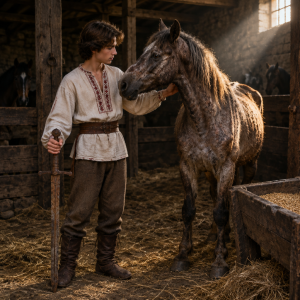
Făt-Frumos (“Handsome Lad”) is the archetypal Romanian fairy-tale hero — a fearless prince who rides out to rescue a kidnapped princess, battle the many-headed balaur or the ogreish căpcăun, and win his bride. Aided by fairy zâne, magic horses, and his own courage, he embodies the triumph of youth and good over monstrous evil.
These tales matter because they are the living folk literature in which Romania’s monsters actually appear. Where the Dacian gods survive in fragments, Făt-Frumos’s adventures kept the balaur, the căpcăun, and the zână circulating in oral tradition for centuries — the popular vehicle that carried the whole bestiary forward.
Afterlife and Cosmology
The single most distinctive thing about Romanian-Dacian belief is its treatment of death — and the Getae’s was extraordinary even by ancient standards. Herodotus reports that they considered themselves immortal: the dying did not perish but went to Zalmoxis, a passage so complete that the transition barely counted as death at all. This conviction reportedly made Dacian warriors terrifyingly fearless.
The most famous ritual expressed this literally. Every four years the Getae chose a messenger by lot to carry their requests to Zalmoxis. Men held three spears upright while others swung the chosen man by his hands and feet and flung him onto the points. If he died, the message had been delivered and the god had accepted it; if he survived, he was blamed as a wicked man and another was sent. Death was not an end but a postal service to the divine.
Later Romanian peasant cosmology layered Christian and folk ideas over this foundation: an elaborate journey of the soul after death, with toll-houses and obstacles, and a deep concern that the dead be buried correctly lest they return as strigoi or moroi. The whole apparatus of staking, exhumation, and reburial exists precisely because the boundary between the living and the dead was felt to be dangerously thin — the dark inheritance of a culture that had once insisted death was not real at all.
How Romanian Mythology Connects to Other Traditions
Romanian folklore sits at a crossroads, and it shows. Its deepest layer is Thracian, making it a sibling of the lost religions of the Balkans, while its medieval folklore is profoundly intertwined with Slavic mythology — the strigoi, the storm-wizards, and the undead wolf all have Slavic cousins, the product of a thousand years of shared Carpathian neighborhood.
The Roman conquest left fingerprints in the vocabulary of the supernatural. The benevolent fairy zână takes her name from Diana, the Roman goddess of the hunt and moon, and the Iele preserve traits of classical nymphs. The thunderbolt-hurling Gebeleizis is the Dacian parallel of Greek Zeus and Slavic Perun, three branches of the same Indo-European storm-god.
The most globally famous connection is also the most distorted. When Bram Stoker wrote Dracula, he drew the name “Scholomance” from the Solomonari‘s devil-school and built his count atop the Romanian strigoi tradition — turning a regional belief about restless corpses into the global archetype of the vampire.
Where to Start Reading
The indispensable ancient source is Herodotus’s Histories (Book IV), which preserves the earliest account of Zalmoxis, the immortality doctrine, and the spear-messenger ritual; Strabo’s Geographica adds the figure of the Dacian high priest Deceneus. For the folklore, the foundational early text is Dimitrie Cantemir’s Descriptio Moldaviae (1714–1716), the first systematic description of Romanian beliefs, including the zburător.
For modern readers, Mircea Eliade — himself Romanian — is the essential bridge: his Zalmoxis, the Vanishing God treats the Dacian religion with a historian-of-religion’s depth, while his broader works set Romanian folklore in global context. The poems of Mihai Eminescu, especially those reworking the zburător and fairy themes, are where the mythology enters high literature, and any good collection of Romanian fairy tales (the Făt-Frumos cycle) shows the bestiary in its living habitat.
Explore Romanian Mythology on Gods and Monsters
Gods and Monsters currently has 17 Romanian mythology entries. Browse all Romanian entries →
Zalmoxis · Gebeleizis · Strigoi · Moroi · Vârcolac · Balaur · Căpcăun · Uriaș · Muma Pădurii · Spiriduş · Iele · Zână · Sânziană · Vâlvă · Vântoase · Zburător · Solomonari
Frequently Asked Questions
What is the difference between a strigoi and a moroi?
The strigoi is the true, immortal undead — a dead person risen from the grave to drain the living, able to shape-shift and turn invisible. The moroi is a lesser, often living or mortal vampire, frequently said to arise from unbaptized or stillborn children. In many accounts the moroi is the earlier stage and the strigoi the fully developed, immortal form. Both are distinct from the pricolici, the undead that returns as a wolf.
Who was Zalmoxis and was he a real person?
Zalmoxis was the supreme god of the Dacians and Getae, lord of immortality. Herodotus records a tradition that he had once been a mortal — even a slave of Pythagoras — who taught his people that they would never truly die, then vanished into an underground chamber for three years and returned as if resurrected. Historians debate whether he was a real reformer-priest later deified, a purely divine figure, or both; what’s certain is that his cult was central to Dacian civilization and that he remains a powerful symbol of Romanian identity.
Is Dracula based on Romanian mythology?
Partly. Bram Stoker set his novel in Transylvania and drew on genuine Romanian beliefs — the strigoi undead and the devil-school of the Solomonari, which he renamed the “Scholomance.” But the aristocratic, cape-wearing vampire of fiction is largely Stoker’s invention, blended with the historical prince Vlad III Țepeș. The folkloric strigoi was a bloated, ruddy reanimated corpse, not a suave nobleman.
What are the Iele and why are they dangerous?
The Iele are beautiful female fairy-spirits who dance in circles at night in forests and meadows. They are dangerous because merely seeing them, hearing their music, or stepping on their scorched dancing-ground can strike a person with paralysis, deformed limbs, madness, or muteness. Romanian folk tradition developed a special ritual dance, the călușari, performed by trained men specifically to cure those afflicted by the Iele.
What is Sânziene and when is it celebrated?
Sânziene is both a class of benevolent summer fairy and the midsummer festival held in their honor on the night of June 23–24, coinciding with the feast of St. John the Baptist. Maidens dress in white and gather yellow bedstraw flowers to weave into crowns, and the heavens are believed to open so the fairies can bless the fields and crops. It is one of the clearest surviving examples of a pagan solstice celebration absorbed into the Romanian Orthodox calendar.
What were the Solomonari?
The Solomonari were legendary weather-wizards believed to have studied in a secret underground school where the devil taught the secrets of the storm. Folk belief held that they could ride the many-headed balaur dragon through the clouds, summon hail and lightning, and wander the countryside disguised as beggars who punished stingy villages with devastating storms. Belief in the Solomonari persisted for centuries as a folk explanation for sudden, destructive weather.