Persian Mythology: The Complete Guide to Cosmic Dualism, the Battle for Creation, and the World’s First Apocalypse
Persian mythology gave the world an idea so influential that most people who hold it have no idea where it came from: the belief that the universe is a battlefield between a god of light and a spirit of darkness, that every human choice tips the cosmic scales, and that history will end in a final judgment when good triumphs forever. Heaven and hell, a final savior born of a virgin, the resurrection of the dead, angels and demons in open war — these ideas were systematized in the highlands of ancient Iran centuries before they entered Judaism, Christianity, and Islam.
What makes the tradition so unusual is that it runs on two engines at once. One is the austere theology of Zoroaster (Zarathustra), preserved in the Avesta, the sacred book of Zoroastrianism — abstract, ethical, obsessed with truth and order. The other is the sweeping national epic of the Shahnameh, the “Book of Kings” completed by the poet Ferdowsi around 1010 CE, where the same cosmic war is fought out by human heroes, blacksmiths, and serpent-shouldered tyrants. To read Persian myth is to watch philosophy and storytelling describe the same struggle from opposite ends.
The result is a mythology of extraordinary moral seriousness wrapped around some of the most vivid monsters and heroes ever imagined: a dog-bird that nurses an abandoned infant on a mountaintop, a king whose shoulders sprout brain-eating snakes, and a unicorn whose horn neutralizes every poison on earth. This guide maps the whole landscape — the gods, the creatures, the central myths, and the cosmology that taught humanity to imagine the end of the world.
What Makes Persian Mythology Different
It is genuinely dualistic — not a god versus a fallen creature, but two primordial forces. In most traditions evil is a rebel within creation. In Zoroastrianism, Ahura Mazda, the “Wise Lord,” and Angra Mainyu, the “Destructive Spirit,” exist independently from the beginning, separated by a void. Creation itself is a war strategy: the material world was made as a trap, a closed arena in which evil could be lured, fought, and finally annihilated. No other ancient mythology is so thoroughly organized around a single ethical conflict.
Ahura Mazda is good but not all-powerful. This is the tradition’s boldest move. Zoroaster’s god is omniscient yet deliberately limited — he cannot simply abolish evil, because evil is a real and separate adversary. This neatly dissolves the “problem of evil” that torments later monotheisms: suffering exists not because a good god permits it, but because a hostile power is actively at war with creation, and humans are conscripted soldiers.
Human choice is cosmically decisive. Every good thought, good word, and good deed literally strengthens Ahura Mazda’s side; every lie strengthens the Destructive Spirit. The Zoroastrian universe has no neutral bystanders. The supreme sin is not impiety but druj — the Lie, falsehood, the deliberate distortion of cosmic order (asha, Truth). A religion built around honesty as the load-bearing virtue is rarer than it sounds.
The gods are abstractions you can practice. The closest beings to archangels, the Amesha Spentas (“Bountiful Immortals”), are not personalities like Zeus or Thor but divine principles — Good Mind, Truth, Dominion, Devotion, Wholeness, and Immortality — each one a virtue you embody and a piece of the physical world you protect. To cultivate the Good Mind, Vohu Manah, is to take the side of a god.
Its monsters are moral arguments. A Persian dragon is not just a beast to be slain; it is the Lie made flesh. When the hero Rostam fights demons or the blacksmith Kaveh raises his banner against a serpent-king, the Shahnameh is restaging the cosmic war on a human scale. Evil in Persian myth always has a face, and that face is usually a lie wearing a crown.
The Major Gods and Divine Beings
The Supreme Powers
Ahura Mazda — the Wise Lord, uncreated source of all good, light, and order. He creates through thought and the agency of his holy spirit, and his name preserves an ancient title: he is the greatest of the ahuras, the “lords” who uphold cosmic truth. In later Middle Persian he is called Ohrmazd.
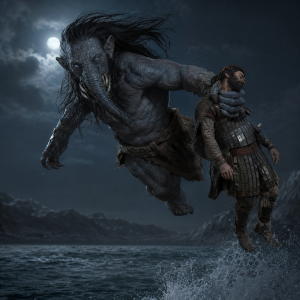
Angra Mainyu — the Destructive Spirit, later Ahriman, the wellspring of death, disease, and the Lie. He did not fall from grace; he chose it, knowingly, at the beginning of time. Everything noxious in the world — predators, winter, decay, demons — is his counter-creation, hurled into the good world to spoil it.
The Amesha Spentas and the Yazatas
Beneath Ahura Mazda stand the Amesha Spentas, the six (or seven, counting the Holy Spirit) Bountiful Immortals who emanate from him as his attributes and guardians of creation. Among them Vohu Manah — “Good Mind” or “Good Purpose” — is the one who first carried Zoroaster’s soul into the presence of God, and who welcomes the righteous dead. Each Immortal protects a domain of the world: Vohu Manah guards cattle and animals; others guard fire, metal, earth, water, and plants.
Below them throng the yazatas, the “beings worthy of worship” — lesser divinities much like angels, each governing some force of nature or virtue.
Mithra — yazata of covenant, contract, and the light of dawn, the all-seeing guardian of oaths who misses nothing and punishes the liar. From this Iranian deity descended the Roman mystery god Mithras, whose cult rivaled early Christianity across the empire.
Anahita — the radiant goddess of the waters, fertility, healing, and wisdom, “the Immaculate One.” Worshipped in great temples across the Persian Empire, she rides a chariot drawn by wind, rain, cloud, and sleet, and in the Shahnameh she comes to the aid of heroes battling the forces of evil.
Aka Manah — the exact dark mirror of Vohu Manah. Where the Good Mind brings clear, righteous thought, Aka Manah is “Evil Mind,” the demon of sensual desire and corrupted intention sent by Angra Mainyu to seduce Zoroaster himself. The pairing is the whole theology in miniature: every good has its precise, deliberate negation.
Creatures, Monsters, and Supernatural Beings
The Great Birds
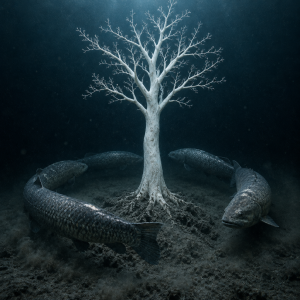
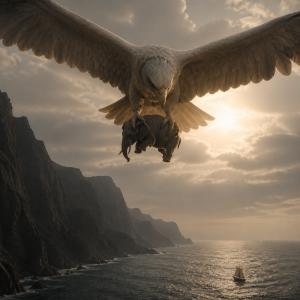
Simurgh — the most beloved creature in Persian myth: an immense, ancient, benevolent bird, often shown with the head of a dog and the claws of a lion, who has seen the world destroyed three times and possesses the wisdom of every age. She nests in the Tree of All Seeds and, most famously, finds the albino infant Zal abandoned on a mountainside and raises him as her own — making her the adoptive grandmother of the hero Rostam. She is a healer and an oracle who gives Zal a feather to burn when he needs her.
Homa — the bird of kingship and fortune (the Huma), said to fly forever without ever touching the ground. Its shadow falling on a person’s head marks them for sovereignty; its image crowned the columns of Persepolis. To kill one was said to doom you to death within forty days.
Chamrosh — a guardian with the body of a dog and the head and wings of an eagle, who lives beneath the Simurgh’s tree. When the great bird beats her wings and shakes the seeds loose, Chamrosh gathers them and scatters them across the earth — and defends the land of Iran against foreign invaders.
Shahbaz — the “royal falcon,” a divine raptor and emblem of the Persian crown, and Roc — the colossal bird of One Thousand and One Nights so vast it carried off elephants to feed its young, known to terrorize sailors like Sindbad.
Beasts and Hybrids
Manticore — from the Persian martyakhwar, “man-eater”: a creature with the body of a red lion, the face of a man with three rows of teeth, and a scorpion’s tail that fires venomous spines. It mimics human voices to lure victims and devours them whole, bones and all, leaving nothing behind. Greek writers carried tales of it westward, where it became a fixture of medieval bestiaries.
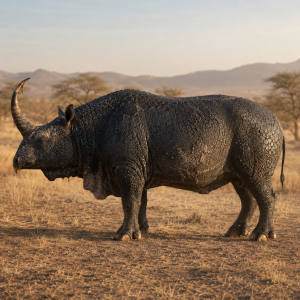
Karkadann and the Unicorn — the karkadann is a fierce single-horned beast of the Persian plains, shy and solitary, whose horn was prized as the ultimate antidote: ground to powder, it neutralized any poison. Persian lore is one of the deep wellsprings of the unicorn legend that later enchanted Europe.
Hadhayosh — a primeval ox of cosmic scale, so enormous that humanity rides across the seas on its back. At the end of time its fat will be mixed with the white haoma to brew the elixir of immortality for the resurrected. Few mythologies reserve so grand a role for cattle.
Demons and Night-Spirits
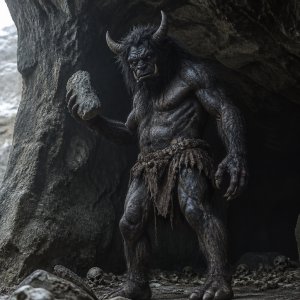
Div — the divs (daevas) are the demon armies of Angra Mainyu: monstrous, horned, often gigantic embodiments of chaos and cruelty whom heroes like Rostam must battle, the most fearsome being the White Div of Mazandaran. They are the foot-soldiers of the Lie.
Peri — beautiful winged spirits descended from fallen beings, neither wholly good nor evil, who hover between the human and divine worlds. Ambiguous and lovely, they were folded over time into a gentler folklore of fairy-like guardians.
Bakhtak — the night-mare demon who sits on a sleeper’s chest and steals their breath, the Persian face of sleep paralysis; Al — a hideous spirit that preys on mothers in childbirth and steals the livers of the newborn; and Machlyes, an obscure being from the old geographies of the Persian world. These are the creatures an AI summary of “Persian mythology” will never reach — and exactly where the tradition’s texture lives.
The Central Myths
The Two Spirits and the Making of the World
Before time, Ahura Mazda dwelt in endless light and Angra Mainyu in endless dark, divided by a void. Ahura Mazda, foreseeing the inevitable assault, created the spiritual and then the material world as a controlled battleground. When Angra Mainyu attacked — smashing through the sky, fouling the waters, withering the first plant, and slaying the primordial ox and the first man — he trapped himself inside the good creation. Now he cannot escape until the war is decided.
Why it matters: this is, in essence, the first fully worked-out theodicy in human history. It reframes all suffering as the temporary cost of a war that good is guaranteed to win — and it makes the cosmos a story with a beginning, a middle, and a triumphant end, rather than an endless cycle.
Zahhak, the Serpent-Shouldered Tyrant
The Shahnameh‘s darkest tale belongs to Zahhak, a once-promising prince corrupted by Angra Mainyu (Ahriman) disguised as a cook. The devil kisses Zahhak’s shoulders, and from each spot a black serpent grows. They cannot be cut away — sever one and two return — and they can be fed only on the brains of young men. Zahhak seizes the throne and reigns for a thousand years of terror, two youths slaughtered every day to feed the snakes.
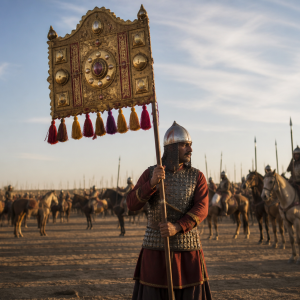
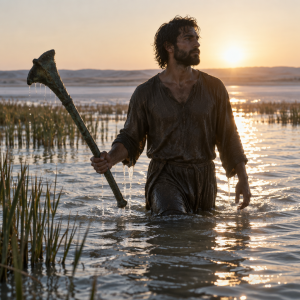
His fall begins with an ordinary man: Kaveh the Blacksmith, who has lost seventeen sons to the serpents. Kaveh tears off his leather apron, raises it on a spear as a banner of revolt — the legendary Derafsh Kaviani — and rallies the people behind the rightful heir, Fereydun. Fereydun defeats Zahhak but does not kill him; instead he chains the tyrant inside Mount Damavand, where he writhes until the end of the world. Why it matters: it is the ancient world’s great parable of tyranny and resistance, in which a common laborer, not a king, lights the spark of justice — and it remains a living political symbol in Iran today.
Rostam and the Tragedy of Sohrab
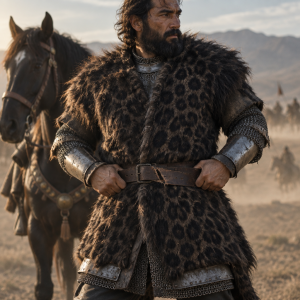
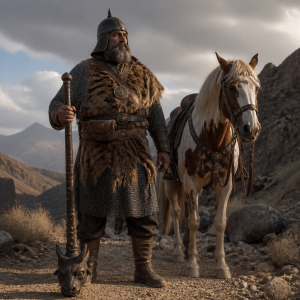
Rostam is the towering hero of the Shahnameh, an almost superhuman warrior raised in the shadow of the Simurgh, the slayer of demons and the defender of Iran across centuries of reigns. His greatest story is also his most devastating: unknowingly, he meets his own son Sohrab in single combat between opposing armies. Neither recognizes the other. Rostam mortally wounds the young man and learns the truth only as Sohrab dies, an amulet revealing the son he never knew. Why it matters: against a mythology obsessed with cosmic order, the Sohrab tragedy insists that even the greatest hero cannot escape blind fate — a note of Greek-style tragedy at the heart of the Persian epic.
Cosmology and the Afterlife: The First Apocalypse
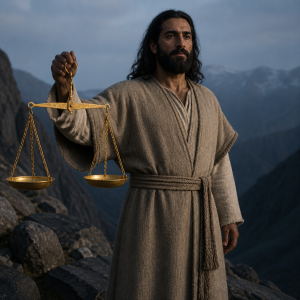
No tradition has shaped the Western imagination of death more quietly than this one. When a Zoroastrian dies, the soul lingers near the body for three days, then journeys to the Chinvat Bridge — the “Bridge of the Separator” — at the peak of the cosmic mountain. There it is judged by three yazatas: Mithra, lord of covenant; Sraosha, lord of conscience; and Rashnu, who holds the scales of justice. The soul’s deeds are weighed.
Then the bridge itself renders the verdict. For the righteous it broadens into a wide road, and a beautiful, fragrant maiden — the soul’s own daena, the embodiment of its good conscience — leads it across to the House of Song, paradise. For the wicked the bridge narrows to a razor’s edge, a foul hag rises to meet them, and they plunge into the House of Lies, a place of cold and stench and isolation. The maiden is not a stranger: she is what you made of your own soul.
But Zoroastrian hell is not eternal. The whole drama bends toward Frashokereti — the “Making Wonderful,” the renovation of the world at the end of time. A virgin-born savior, the Saoshyant, will arise; the dead will be resurrected in their bodies; and all humanity will pass through a river of molten metal, which feels like warm milk to the good and like fire to the wicked. In that final purification even the souls in hell are cleansed, Angra Mainyu and the Lie are destroyed forever, and the world is restored to flawless, deathless perfection. Why it matters: the resurrection of the body, a final savior, a last judgment, and the ultimate defeat of evil — the architecture of apocalypse that Judaism, Christianity, and Islam would inherit — was first assembled here.
How Persian Mythology Connects to Other Traditions
The Vedic split. Persian and Indian religion share a common ancestor, and the fracture between them is written into their vocabulary. In Iran the ahuras are the good lords and the daevas are demons; in Hindu mythology it is reversed — the devas like Indra are gods, while the asuras are their demonic rivals. The same sacred plant is the Iranian haoma and the Indian soma; the god Mithra mirrors the Vedic Mitra, the partner of Varuna. Two religions descended from one and reversed each other’s heaven and hell.
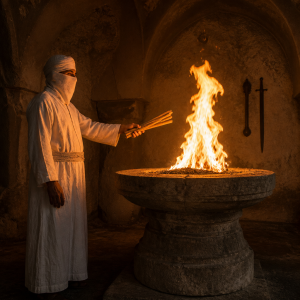
The Abrahamic inheritance. During the Babylonian exile and after, Jewish thought encountered Persian religion under the empire that freed it — and the timeline of angels, a named Satan, bodily resurrection, a coming messiah, and a final judgment in Judaism, then Christianity and Islam, tracks closely onto Zoroastrian eschatology. The Magi who follow a star to Bethlehem in the Gospel are, literally, Zoroastrian priests.
The Roman frontier. The yazata Mithra traveled west and became Mithras, the bull-slaying god of a secretive soldiers’ cult that spread across the Roman Empire and, for a time, competed with Christianity — a direct bridge between Persian and Roman mythology.
The shared monsters. The serpent-of-chaos pattern that runs through Mesopotamian mythology — the primordial dragon Tiamat — echoes in Zahhak the serpent-king, while the great Persian birds shaped the phoenix and the griffin, and the man-faced manticore belongs to the same family of human-beast hybrids as the Egyptian and Greek sphinx. Persian myth was a clearinghouse where the monsters of three continents met and changed shape.
Where to Start Reading
The two essential primary sources sit at opposite poles. The Avesta — especially the Gathas, hymns attributed to Zoroaster himself, and the Yashts, hymns to individual yazatas like Mithra and Anahita — gives you the theology in its rawest form. The later Pahlavi text the Bundahishn (“Primal Creation”) is the single best source for the creation myth and cosmology. For the heroic tradition, nothing replaces Ferdowsi’s Shahnameh; Dick Davis’s acclaimed verse-and-prose translation is the most readable English gateway to Zahhak, Kaveh, and Rostam.
For modern introductions, Mary Boyce’s Zoroastrians: Their Religious Beliefs and Practices remains the standard scholarly entry point, while Jenny Rose’s Zoroastrianism: An Introduction is accessible and current. For the myths specifically, John Hinnells’s Persian Mythology is a compact, well-illustrated survey.
Explore Persian Mythology on Gods and Monsters
Gods and Monsters hosts 23 entries drawn from the Persian and Zoroastrian tradition, from supreme deities to half-forgotten night-demons. Browse all Persian Mythology entries →
Ahura Mazda · Angra Mainyu · Ahura · Mithra · Anahita · Aka Manah · Simurgh · Homa · Chamrosh · Shahbaz · Roc · Manticore · Karkadann · Unicorn · Hadhayosh · Div · Peri · Bakhtak · Al · Machlyes · Zahhak · Rostam · Kaveh the Blacksmith
Frequently Asked Questions
Is Persian mythology the same as Zoroastrianism?
They overlap heavily but are not identical. Zoroastrianism is the religion founded by Zoroaster, with its own theology of Ahura Mazda and the Amesha Spentas. Persian mythology is the broader body of Iranian stories, which includes Zoroastrian cosmology but also the heroic legends of the Shahnameh — tales of Rostam and Zahhak — and older folk creatures that predate or sit outside the religion. Think of Zoroastrianism as the sacred core and Persian mythology as the whole cultural galaxy around it.
Did Persian mythology influence Christianity and Islam?
Most scholars think the influence was significant. Concepts that are central to the Abrahamic faiths — a cosmic struggle between God and a devil, hosts of angels and demons, the resurrection of the body, a final judgment, heaven and hell, and a messiah-like savior — are all systematized in Zoroastrianism centuries earlier. Jewish thought encountered Persian religion during and after the Babylonian exile, under the empire of Cyrus that ended it, and these ideas flowed forward into Christianity and Islam. The Magi of the Christmas story were Zoroastrian priests.
What is the most powerful creature in Persian mythology?
The Simurgh is the most revered — an ancient, benevolent bird of immense wisdom who has watched the world destroyed and reborn three times, heals the sick, and raises the abandoned. She is less a monster than a guardian and oracle. For sheer menace, the manticore with its venomous tail and the brain-fed serpents of Zahhak are the great terrors. The Homa bird, meanwhile, holds a different kind of power: the ability to grant kingship with its shadow.
Who is the main god of Persian mythology?
Ahura Mazda, the “Wise Lord,” is the supreme creator god of Zoroastrianism — wholly good, the source of light and order. Crucially, he is opposed by an independent evil power, Angra Mainyu, rather than ruling unchallenged. Beneath Ahura Mazda are the Amesha Spentas and yazatas such as Mithra and Anahita, who function somewhat like archangels and lesser divinities.
What is the Chinvat Bridge?
The Chinvat Bridge is the “Bridge of the Separator” that every soul must cross after death in Zoroastrian belief. Three yazatas — Mithra, Sraosha, and Rashnu — judge the soul’s deeds at the bridge. For the righteous it widens into a road to paradise, met by a beautiful maiden who is the embodiment of their own good conscience; for the wicked it narrows to a knife’s edge over the abyss. It is one of the earliest “judgment after death” structures in world religion and a likely ancestor of the bridge imagery in later traditions.
Why does Zahhak have snakes growing from his shoulders?
In the Shahnameh, the prince Zahhak is corrupted by the devil Ahriman, who disguises himself as a cook and kisses Zahhak’s shoulders. Two black serpents sprout from the spots and cannot be removed — cut one and two grow back — and they can be soothed only by being fed the brains of young men. The image is a brilliant moral allegory: evil, once embraced, becomes part of the body, feeds on the innocent, and cannot simply be cut away. His eventual defeat by the blacksmith Kaveh and the hero Fereydun makes him the archetypal tyrant overthrown by a people’s rebellion.