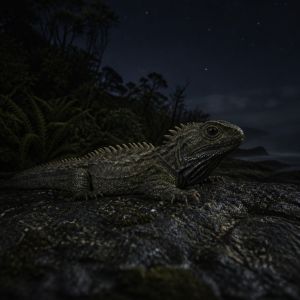
Māori Mythology: The Complete Guide to the Separation of Sky and Earth, the Demigod Māui, and the World of Aotearoa
Māori mythology begins not with a creator standing apart from the world, but with two lovers locked in a crushing embrace. Ranginui the Sky Father and Papatūānuku the Earth Mother clung so tightly together that their many children were trapped in the cramped darkness between their bodies, unable to stand, unable to see light. The whole of Māori cosmology unfolds from what those children decided to do about it. There is no god who speaks the world into being from outside; the universe is a single genealogical family, and creation is a domestic crisis solved by force.
This is one of the youngest of the world’s great mythologies in written form and one of the most vividly preserved. The Māori reached Aotearoa (New Zealand) only around 700 years ago — the last major landmass on Earth settled by humans — carrying a Polynesian inheritance they reshaped in isolation against a strange new land of giant flightless birds, glowworm caves, and steaming volcanic ground. Because settlement was so recent and oral tradition so disciplined, the myths come down to us with extraordinary clarity. The most important primary source is Nga Tama a Rangi (“The Sons of Heaven”), written in 1849 by Wī Maihi Te Rangikāheke of Ngāti Rangiwewehi, supplemented by the vast collections of George Grey and the ethnographer Elsdon Best.
What follows is the world as the Māori understood it: a cosmos of contending brothers, a fishhook that hauled up an island, and a journey that every spirit still makes to the northern tip of the land.
What Makes Māori Mythology Different
Everything is whakapapa — genealogy. Māori thought does not separate gods, ancestors, humans, animals, mountains, and winds into different categories of being. They are all kin, connected by an unbroken genealogical chain (whakapapa) reaching back to the primal parents. To know how the world works is to know who is descended from whom. A river, a fish, and a chief can all be traced to the same ancestors, which is why reciting genealogy is itself a sacred and powerful act.
Creation is separation, not construction. The decisive act is not making something from nothing but prising two things apart. Light, space, growth, and life all become possible only when the children force Ranginui and Papatūānuku apart. The cosmos emerges from the void in named stages — Te Kore (the nothingness), Te Pō (the long night), and finally Te Ao Mārama (the world of light) — a progression from potential to darkness to dawning.
The land is a fished-up body and a written record at once. The North Island is literally Te Ika-a-Māui, the Fish of Māui, hauled from the sea; the South Island is his canoe. Place names across Aotearoa record ancestral deeds, so the map of New Zealand is also a mythological text. To travel the land is to read the genealogy of the gods written into its hills and harbours.
The hero is a trickster, not a saint. The central culture-hero, Māui, is a half-divine troublemaker — the runt of his family, born premature and thrown into the sea — who wins fire, land, and longer days for humanity through cunning and outright theft rather than virtue. His final overreach, an attempt to abolish death itself, is what dooms all people to mortality. Māori myth admires audacity and forgives mischief in a way that more moralising traditions do not.
Tapu and mana are the physics of the sacred. Two concepts govern the mythic world: mana, the spiritual authority that flows through people and objects, and tapu, the sacred restriction that protects it. Breaking tapu has consequences as real and automatic as touching fire — these are not abstract morals but the operating rules of reality itself.
The Major Gods and Deities
The Primal Parents and the Void
Ranginui and Papatūānuku — the Sky Father and Earth Mother, the primal couple from whom all gods, creatures, and humans descend. Forced apart by their own children, they grieve still: Ranginui’s tears fall as dew and rain, and the mist that rises from Papatūānuku is her sighing back to him. Their separation is the founding event of the world. Above them, in some esoteric traditions, stands a supreme parentless being, Io Matua Kore — though whether Io is an ancient secret deity or a later systematisation remains one of the great debates of Māori scholarship.
The Departmental Gods — Children of Rangi and Papa
Tāne — god of forests, birds, and light, and the most consequential of the brothers. Where the others failed, Tāne lay on his back and pushed with his powerful legs until at last he forced his parents apart, letting in the light. He then clothed his naked father with the stars and his mother with trees, and — most importantly — fashioned the first woman, Hineahuone, from the red earth of Papatūānuku, becoming the ancestor of humankind. He is often called Tāne Mahuta, the name now given to New Zealand’s greatest living kauri tree.
Tangaroa — god of the sea and father of all fish and reptiles, controller of the tides. When the brothers turned on one another, Tangaroa’s grandchildren split: some fled to the sea, others to the land, beginning an ancient feud between sea and forest that explains why the tide eternally gnaws at the shore. As the great ocean deity of the Pacific, he is one of the most widely worshipped gods across Polynesia.
Tūmatauenga — the fierce god of war and of humankind, the boldest of the brothers, who alone argued that the parents should be killed rather than merely parted. When his brother Tāwhirimātea attacked the family with storms, Tūmatauenga stood firm where the others fled, and in revenge he learned to trap, snare, and eat the children of his brothers — which is why humans, his descendants, hunt the birds, fish, and plants of the world.
Tāwhirimātea — god of winds and storms, the only brother who opposed the separation of the parents. Enraged by their grief, he followed his father into the sky and unleashed hurricanes, squalls, and clouds against his siblings. The chaos of weather is his unending war against the brothers who tore the family apart.
Rongo and Haumia-tiketike — Rongo is the god of cultivated food, especially the kūmara (sweet potato), and of peace; his brother Haumia-tiketike is the god of wild, uncultivated food such as the fernroot. When Tāwhirimātea’s storms raged, their mother Papatūānuku hid these two gentle brothers in her body, which is why root crops grow safely underground.
Whiro — the god of darkness, death, and all evil, who chose to remain in the gloom rather than enter the world of light. The long cosmic enmity between Whiro and his brother Tāne — light against darkness, knowledge against ignorance — runs through the whole of Māori cosmology. Whiro is said to gnaw eternally at the props that hold sky and earth apart, and disease and decay are his work.
The Gods of Death and the Dark
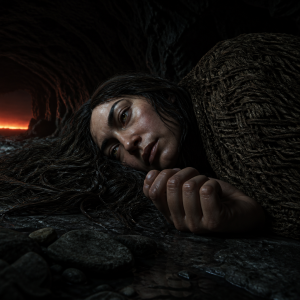
Hine-nui-te-pō — the great goddess of death and night, guardian of the underworld of Rarohenga. She was born Hine-tītama, the dawn-maiden and daughter of Tāne. On discovering that her husband was also her father, she fled in shame to the underworld, telling Tāne to remain in the world of light to raise their children while she would draw them down to her in death. She is the destination of every spirit and the reason humans do not live forever.
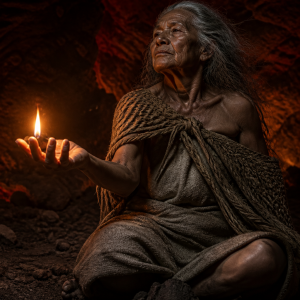
Mahuika — the fire goddess, a fierce ancestress in whose burning fingernails and toenails the secret of fire was hidden. Her encounter with Māui nearly set the whole world ablaze. The Mareikura, a class of celestial female attendants or heavenly handmaidens dwelling in the upper realms, belong to this same luminous, female-coded sphere of the Māori cosmos.
Creatures, Monsters, and Supernatural Beings
Guardians and Water Monsters
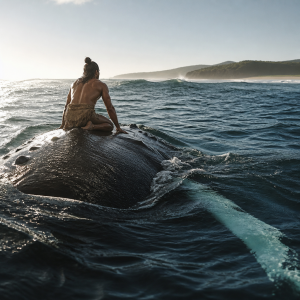
Taniwha — the most famous of all Māori supernatural beings: great water-dwelling creatures that lurk in deep river pools, sea caves, and dangerous currents. A taniwha can be a fearsome predator that devours travellers, or a revered guardian (kaitiaki) of a particular tribe and place, warning of danger and enemies. Many are tied to specific rivers and harbours, and to this day a taniwha’s traditional dwelling can halt a construction project.
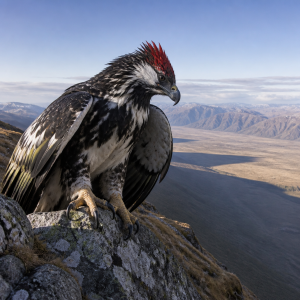
Pouākai — a monstrous man-eating bird, also called the pouākai, large enough to seize and carry off human beings. The legend almost certainly preserves a memory of Haast’s eagle (Hieraaetus moorei), a real raptor with a three-metre wingspan that hunted the giant moa and survived until perhaps 600 years ago — one of the rare myths grounded in an animal early Māori may actually have feared.
The Fairy Folk and Pale Spirits
Patupaiarehe — pale-skinned, fair- or red-haired fairy people who live in the mist on forested mountaintops. Unlike most spirits they fear sunlight, fire, and cooked food, emerging only in fog and darkness. Their seductive flute music and singing could lure people away, and unions between patupaiarehe and humans were sometimes said to explain children born with unusually fair colouring.
Tūrehu — closely related pale spirit-folk, often invisible or glimpsed only at dawn and dusk, dwelling in the mountains and possessing magical knowledge. In some traditions a tūrehu woman named Whaitiri or Hine-rēhia taught humans the arts of weaving and netting, marking these beings as bringers of crafts as much as hauntings.
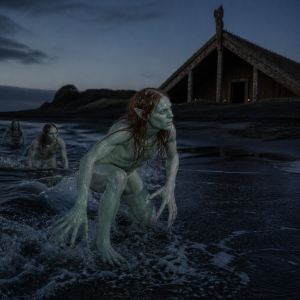
Ponaturi — hostile sea-fairies, goblin-like beings who dwell beneath the ocean by day and come ashore only at night to sleep, because, like the patupaiarehe, sunlight is fatal to them. The hero Tāwhaki avenged his father by trapping a horde of ponaturi in a house until daybreak, then flooding it with sudden light to destroy them.
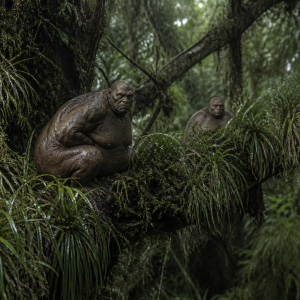
Nuku-mai-tore — strange and obscure forest beings, described as wood-fairies or tree-spirits with slender bodies and large chests, who live in the branches and the trailing epiphytes of the deep bush. They are among the most alien of the spirit-folk, glimpsed rarely and barely understood even within the tradition.
Mareikura — celestial beings, the female attendants of the highest heavens in the more esoteric cosmologies, counterparts to the male whatukura. They surround the supreme realms and are emblematic of the layered, ascending heavens of Māori sacred geography.
The Wild and the Shapeshifters
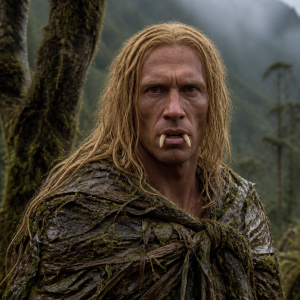
Maero — savage wild men of the forest and mountains: hairy, with long bony fingers ending in claw-like nails, hostile to all humans. Solitary and ferocious, the maero hunt with stone and bone, and stories of them shade into the New Zealand “wild man” tradition — a Pacific cousin to the world’s hairy-hominid legends.
Hakuturi — the guardians of the forest, a host of bird-spirits or tiny forest people who protect Tāne’s domain. In the great myth of Rātā, the hero felled a sacred tree to build a canoe without performing the proper rites; the hakuturi gathered overnight and magically restored every chip and splinter, raising the tree whole again, until Rātā learned to respect the forest’s tapu.
Hai-uri — a fearsome shapeshifting being of the wild, able to alter its form, counted among the strange and dangerous denizens of the bush. Like the maero, it belongs to the menacing, untamed side of the forest world that lay beyond the safety of the village.
Tipua — not a single creature but a category: any object, animal, tree, rock, or place imbued with uncanny supernatural power and a will of its own. A boulder that must be greeted with an offering, a tree that brings misfortune to those who cut it, a lizard that is an ancestor in disguise — all are tipua, the points where the everyday world turns strange and demands respect.
The Central Myths
The Separation of Rangi and Papa
Trapped in suffocating darkness between their tightly embracing parents, the children of Ranginui and Papatūānuku debated what to do. Tūmatauenga argued for killing them; Tāne argued instead for pushing them apart so that the parents might live and the children gain room to grow. One after another the brothers strained against the sky — Rongo, Tangaroa, Haumia, Tū — and all failed. Then Tāne braced his shoulders against the earth and his feet against the sky and pushed with his legs, slowly, agonisingly, until the parents were torn apart and light flooded into the world for the first time.
Why it matters: this is the Māori act of creation, and it sets the moral key of the whole mythology. Light, knowledge, and life are not given freely; they are won through effort and at the cost of grief. The separation also seeds the first conflict, as Tāwhirimātea’s fury at the parting begins the wars that scatter the gods across sea, forest, and sky.
Māui Fishes Up the North Island
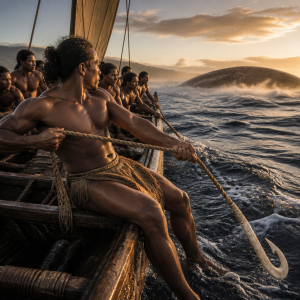
The young demigod Māui, despised by his older brothers, stowed away in their canoe on a fishing trip far out to sea. Using a magic fishhook fashioned from the jawbone of his ancestress Murirangawhenua and baited with blood from his own nose, he cast into the depths and hooked something colossal. With enormous effort he hauled up a vast fish — the land that became the North Island of New Zealand, Te Ika-a-Māui. While Māui went to make peace with the gods, his impatient brothers began hacking at the fish for portions, and its thrashing agony raised the mountains, gouged the valleys, and broke the smooth land into the rugged terrain it has today.
Why it matters: the myth literally maps the geography of Aotearoa onto a single ancestral deed, turning the entire North Island into the body of a sacred catch and the South Island (Te Waka-a-Māui) into his canoe. It is the founding charter of the land itself.
Māui Snares the Sun and Steals Fire
In the early world the sun raced across the sky, leaving days too short for work or food. Māui led his brothers east to the pit where the sun-god Tama-nui-te-rā slept, wove great flax ropes, and noosed him as he rose. As the sun struggled, Māui beat him with the enchanted jawbone until, battered and exhausted, Tama-nui-te-rā agreed to crawl slowly across the heavens — giving us our long days. Later Māui wheedled fire from his ancestress Mahuika, who drew it from her burning fingernails. When his trickery enraged her, she flung fire across the world; Māui fled as a hawk, and the last flames took refuge in certain trees — which is why fire can still be drawn from dry wood.
Why it matters: these are the gifts of civilisation — usable time and fire — won not by prayer but by audacity and theft. They define Māui as the supreme culture-hero of the Pacific and embody the tradition’s delight in cleverness over piety.
Māui and the Goddess of Death
Emboldened by his triumphs, Māui set out to win immortality for all humankind by conquering death itself. He found the great goddess Hine-nui-te-pō asleep, her body vast, her thighs set with sharp volcanic obsidian. Māui planned to reverse birth and death by crawling in through her and emerging from her mouth, which would make her — and through her all people — deathless. Transforming into a worm, he entered the sleeping goddess. But the little fantail bird, the pīwakawaka, watching the absurd sight, could not stop itself from bursting into laughter. The goddess woke, and her thighs snapped shut, crushing Māui and killing him.
Why it matters: this is the Māori explanation for human mortality. The one being who might have abolished death failed at the final, most audacious trick, and his death sealed the fate of everyone after him. That the agent of doom is a giggling fantail is pure Māori — cosmic tragedy turning on a moment of irrepressible mirth.
Afterlife and Cosmology
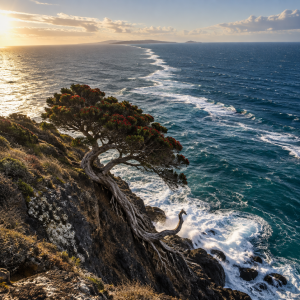
When a Māori person dies, the wairua (spirit) does not simply vanish or face judgment. It sets out on a journey. Travelling up the western coast of the North Island, the spirit makes its way to the far northern tip of the land, to Te Rerenga Wairua — Cape Reinga, “the leaping place of spirits.” There a gnarled, ancient pōhutukawa tree clings to the cliff, and by one of its roots the spirit descends to the sea below, pausing at the island of Ohaua to look back one last time at the land of the living before continuing on toward the ancestral homeland of Hawaiki, the place from which the Māori came.
Below lies Rarohenga, the underworld — and here Māori thought diverges sharply from the grim afterlives of other traditions. Rarohenga is not a place of torment but a realm of light, ruled with care by Hine-nui-te-pō, which all spirits enter regardless of their conduct in life and where there is no punishment. The dead are not lost; spirits can return to guide and warn the living, and the boundary between worlds is permeable. The cosmos rises in a series of stacked heavens — often counted as twelve — to the highest realm where, in the esoteric tradition, the supreme being Io dwells, attended by the Mareikura and whatukura.
This vision — an underworld of light, a spirit-journey written onto the real geography of New Zealand, and a deathless homeland to return to — is where Māori mythology is at its most distinctive and most moving.
How Māori Mythology Connects to Other Traditions
Māori mythology is the southern frontier of one of the largest cultural families on Earth: Polynesian mythology. The same gods sailed with the ancestors across thousands of kilometres of open ocean, which is why the sea-god Tangaroa, the forest-god Tāne (as Kāne), and above all the trickster Māui appear, under cognate names and with the same exploits, from New Zealand to Tahiti to Hawaii.
The clearest parallel is with Hawaiian mythology, where Māui likewise fishes up islands and snares the sun, and where the volcanic landscape is presided over by the fire goddess Pele — a counterpart in temperament to the fierce Māori fire-ancestress Mahuika. Reading the two traditions side by side reveals how a shared body of myth adapts to its environment: Hawaii’s myths are shaped by lava and the open Pacific, Māori myths by mist-forests, geothermal land, and the giant birds of an isolated continent.
Looking west to the older traditions of the region, Aboriginal Australian mythology offers a striking contrast: where Aboriginal Ancestral Beings sing a timeless Dreaming into the land, Māori myth is genealogical and event-driven, a chain of named ancestors and decisive deeds. The separation of earth and sky also echoes far beyond the Pacific — the same primal motif of a sky-father and earth-mother forced apart appears in Egyptian myth (Geb and Nut) and Greek myth (Ouranos and Gaia), suggesting a deep, possibly universal human image of creation as a tearing-apart.
Where to Start Reading
The foundational primary source is Sir George Grey’s Polynesian Mythology (1855), drawn directly from the manuscripts of Wī Maihi Te Rangikāheke and still the most readable gateway to the great myth cycles of Rangi and Papa, Māui, and Tāwhaki. For depth, the early-20th-century writings of the ethnographer Elsdon Best — especially his works on Māori religion and cosmology — preserve the esoteric Io tradition and the layered heavens, though they should be read with awareness of his interpretive biases.
For modern readers, Margaret Orbell’s The Illustrated Encyclopedia of Māori Myth and Legend is the single best reference, and A. W. Reed’s collections remain popular, accessible introductions. The New Zealand government’s online Te Ara Encyclopedia offers authoritative, iwi-informed entries free of charge. Begin with the separation myth and the deeds of Māui; everything else branches from them.
Explore Māori Mythology on Gods and Monsters
Gods and Monsters currently holds 14 Māori entries, from the primal parents to the pale folk of the misted hills. Browse all Māori entries →
Ranginui and Papatūānuku · Tāne · Tangaroa · Māui · Taniwha · Pouākai · Patupaiarehe · Tūrehu · Ponaturi · Nuku-mai-tore · Mareikura · Maero · Hakuturi · Hai-uri · Tipua
Frequently Asked Questions
Who is the main god in Māori mythology?
There is no single supreme ruler in the way Zeus rules the Greek pantheon. The most important active gods are the children of the primal parents, above all Tāne, god of forests and light, who separated earth and sky and created the first human, and Tangaroa, god of the sea. In some esoteric traditions a supreme parentless being called Io stands above all, but the gods people actually dealt with were the departmental gods of forest, sea, war, weather, and food.
What is the Māori creation story?
In the beginning the Sky Father Ranginui and Earth Mother Papatūānuku lay locked together, trapping their children in darkness. The children resolved to separate them, and after every other brother failed, Tāne pushed them apart with his legs, letting light into the world. The parents’ grief endures as rain and rising mist. Creation in Māori thought is thus an act of separation rather than construction.
Who is Māui in Māori mythology?
Māui is the great demigod trickster and culture-hero — born premature, raised by the gods, and forever underestimated by his brothers. He fished up the North Island, snared the sun to lengthen the days, and stole fire from the goddess Mahuika for humankind. His final attempt to defeat death by passing through the goddess Hine-nui-te-pō killed him and condemned all people to mortality. He is the same hero (Māui, Maaui, Mawi) found across Polynesia.
What is a taniwha?
A taniwha is a powerful supernatural creature dwelling in deep water — rivers, lakes, sea caves, and dangerous currents. Taniwha can be deadly monsters that devour unwary travellers, but many are protective guardians (kaitiaki) of a particular tribe or place, warning of enemies and danger. They remain culturally significant in modern New Zealand, where a recognised taniwha site can influence land use and construction decisions.
What did the Māori believe happens after death?
The spirit (wairua) travels north along the coast to Cape Reinga, Te Rerenga Wairua, the leaping place of spirits, and descends by the root of an ancient pōhutukawa tree into the sea, journeying on toward the ancestral homeland of Hawaiki. Below lies Rarohenga, the underworld ruled by Hine-nui-te-pō — notably a realm of light rather than torment, which all spirits enter regardless of how they lived. There is no judgment or hell.
What are patupaiarehe?
The patupaiarehe are pale-skinned, fair- or red-haired fairy people who live in the mists of forested mountaintops. Unusually among spirits, they fear sunlight, fire, and cooked food, appearing only in fog and at night. Their enchanting flute music could lure people into the hills, and they are closely related to the tūrehu, another race of pale mist-dwelling spirits credited with teaching humans crafts such as weaving.