Literary Mythology: The Complete Guide to Invented Pantheons, Authored Monsters, and Modern Mythmaking
Every other mythology on this site was authored by no one. Its gods accreted over centuries of oral telling, its monsters drifted from village to village, and by the time anyone wrote them down the original makers were long anonymous. Literary mythology is the exact opposite: here we know the name, the publication date, and often the exact desk at which a god was born. Azathoth was dreamed up by a sickly recluse in Providence, Rhode Island. Morgoth was invented by an Oxford philologist filling notebooks in the trenches of the First World War. The shape-shifting Á Bao A Qu was fabricated by a blind Argentine librarian who then cited two books that do not exist.
This is mythology with a paper trail — and that changes everything about how we read it. A folk monster answers the question “what did a culture fear?” A literary monster answers “what did one extraordinary mind fear, and why did millions adopt that fear as their own?” The figures gathered here did something almost no invented character ever manages: they slipped the leash of their original story and became free-floating myth, retold, feared, and believed-in by people who have never read the book. That is the test of this category. Grendel, Nyarlathotep, and the Fisher King now circulate the way Anansi or the Minotaur do — as common property, no longer owned by the page.
The primary sources are not sacred texts but books with copyright pages: the Old English Beowulf manuscript (the Nowell Codex, c. 1000 AD), Wu Cheng’en’s sixteenth-century Journey to the West, the Grail romances of Chrétien de Troyes, William Blake’s Songs of Experience, the pulp pages of Weird Tales, J.R.R. Tolkien’s legendarium, and L. Frank Baum’s Oz. What unites them is a deliberate act the medievalists’ word for which is mythopoeia — myth-making — the conscious construction of a mythology by a single imagination.
What Makes Literary Mythology Different
It has a birthday. Unlike Zeus or Odin, whose origins vanish into prehistory, every being here can be dated. The King in Yellow appears in Robert W. Chambers’s 1895 collection; the Hound of Tindalos debuts in the March 1929 issue of Weird Tales. This is mythology you can hold the first edition of — and that traceability lets us watch a myth form in real time, something no other tradition allows.
The author and the believer collaborate. Folk myth is shaped by the crowd; literary myth is launched by one person and then shaped by the crowd. The clearest case is the Cthulhu Mythos: H.P. Lovecraft invented the entities, but the very term “Cthulhu Mythos,” the elemental classification system, and the promotion of Nyarlathotep and Azathoth into a coherent pantheon were the work of his correspondent August Derleth, after Lovecraft’s death. A literary mythology is rarely finished by its founder.
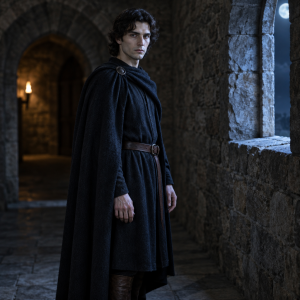
It can be deliberately built to fill a gap. Tolkien famously lamented that England had no mythology of its own — the Arthurian cycle felt too French, the Norse material too foreign — so he set out to construct one on purpose, from invented languages upward. Morgoth, Tom Bombadil, and the warg are not survivals of an old faith; they are the engineered foundations of a new one, assembled to feel ancient.
It hides forgeries in plain sight. Because the author controls the citations, literary myth can manufacture its own false pedigree. Borges presented Á Bao A Qu as authentic Malay folklore and sourced it to a Burton essay and a 1937 book on Malay witchcraft — both invented. Lovecraft’s Necronomicon is a wholly fictional grimoire that readers still write to libraries asking to borrow. Half the power of the genre is its talent for impersonating the genuine article.
It collapses the line between hero and monster. The genre’s oldest text already knew this. The Old English word aglaeca is applied in Beowulf to the monster Grendel, to the dragon — and to the hero Beowulf himself. There is no Old English word that simply means “monster”; the same term covers any awesome, uncanny combatant. Literary mythology, from its very beginnings, treats the terrifying and the heroic as two faces of one thing.
The Invented Gods and Dark Lords
Literary mythology’s deities split cleanly into two species: cosmic horrors who are indifferent to humanity, and fallen lords who are very much not. Both were invented to do theological work their authors found missing in the religions they grew up with.
The Great Old Ones and Outer Gods
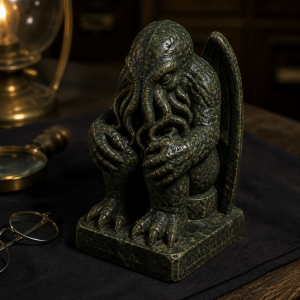
Azathoth — the blind idiot god at the center of the universe, the supreme entity of Lovecraft’s cosmos. He sprawls at the heart of infinity, gibbering mindlessly to the piping of demonic flutes, dreaming the reality we inhabit. He is monotheism inverted: an omnipotent creator with no mind, no plan, and no interest in us whatsoever — the most nihilistic deity in fiction.
Nyarlathotep — the Crawling Chaos, the one Outer God who actively walks among humans wearing a thousand masks. Unlike the inert Azathoth, Nyarlathotep is the messenger and soul of the Outer Gods, a malevolent intelligence who delights in driving civilizations to madness for sport. He is the closest thing Lovecraft’s bleak universe has to a personal devil.
The King in Yellow — older than Lovecraft and arguably his model. Robert W. Chambers’s 1895 stories center on a forbidden play that drives its readers insane; the tattered, masked King and the dead city of Carcosa hover at its edges. Derleth later annexed the King into the Mythos as an avatar of Hastur, fusing two separate literary inventions into one mythology — a perfect demonstration of how this genre grows by accretion.
Therion — the Great Beast, where invented mythology bleeds into lived religion. The occultist Aleister Crowley took “To Mega Therion” (Greek for “the Great Beast,” numerologically 666) from the Book of Revelation and adopted it as his magical name and self-mythology. Here a figure from one literary text — the Apocalypse — is rewritten by a single author into a new mythos he genuinely tried to found.
The Fallen Lords
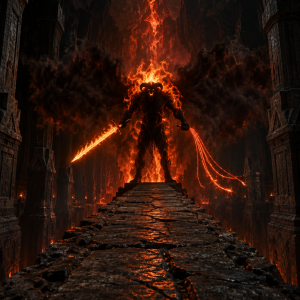
Morgoth — the first and greatest evil of Tolkien’s world, the Dark Lord before Sauron was merely his lieutenant. Originally Melkor, mightiest of the angelic Ainur, he marred creation itself at the moment of its making, pouring his malice into the very substance of the world. He is Tolkien’s Lucifer, and his ambition dwarfs every later villain in the legendarium.
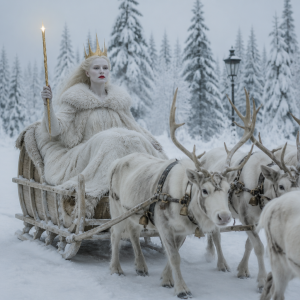
Jadis, the White Witch — the queen who holds Narnia in a hundred-year winter where it is “always winter and never Christmas.” C.S. Lewis built her from the dead world of Charn, a Snow Queen and a Lilith-figure rolled into one, embodying the sterile, joyless tyranny that Lewis set against the thaw of grace. She is among the most recognizable villains literature ever produced.
Authored Monsters and Supernatural Beings
If literary mythology has a true heartland, it is the monster. Folk traditions repeat a handful of stock creatures; authored monsters are bespoke, each engineered to embody one specific dread its inventor could not shake.
The Anglo-Saxon Terrors
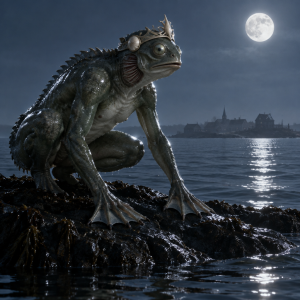
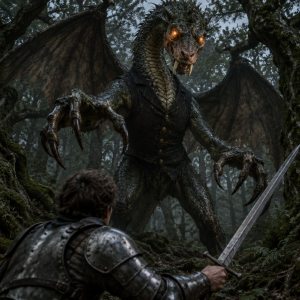
Grendel — the night-stalking fiend of Beowulf, descended from the biblical Cain, who raids the mead-hall Heorot for twelve years before Beowulf tears off his arm. Grendel is the earliest fully realized monster in English literature and the model for a thousand later horrors: the outsider who haunts the lit hall from the cold dark beyond it.
Grendel’s mother — the deeper terror. When Beowulf kills Grendel, his mother rises from her underwater lair to avenge him, dragging the hero down to a hall beneath a haunted mere. She is one of literature’s first avenging mothers and, in modern readings, its first genuinely ambiguous monster — grief and law-bound vengeance wearing a fiend’s shape.
Aglaeca — not a creature but a word, and one of the most revealing in the whole tradition. This Old English term, usually mistranslated “monster,” is applied in Beowulf to Grendel, the dragon, and Beowulf alike. It means something closer to “awesome combatant” or “uncanny intruder,” and it proves that Anglo-Saxon poets did not divide the world into clean heroes and villains the way we do.
The Cosmic Horrors
Hound of Tindalos — Frank Belknap Long’s 1929 invention, a creature that inhabits the angles of time while all ordinary life descends from its curves. Disturb the deep past through drugs or science and the Hounds catch your scent across the geometry of the universe, leaking through any sharp corner to reach you. It is one of the few monsters whose horror is fundamentally mathematical.
Mbwun — “He Who Walks On All Fours,” the relic-beast of Douglas Preston and Lincoln Child’s 1995 thriller Relic. A creature engineered by a lost Amazonian people from a mutagenic plant, Mbwun proves that the museum-monster tradition is alive and commercial: a modern myth built to the exact specifications of a bestselling page-turner.
Beasts of the Legendarium
Warg — Tolkien’s evil, intelligent wolves, mounts and allies of the orcs, who speak their own dread tongue and burn rather than leave usable corpses. Tolkien drew the name from the Old Norse vargr (wolf, outlaw), reanimating a real philological root into a living monster — his standard method for making the invented feel inherited.
Morlocks — H.G. Wells’s subterranean descendants of humanity in The Time Machine (1895), pale ape-like cannibals who tend the surface-dwelling Eloi like livestock. Wells built them as a savage parable of Victorian class division taken to its evolutionary conclusion: the working class bred down into predators, the leisure class fattened into prey.
Things Stranger Still
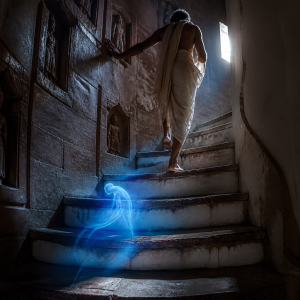
Á Bao A Qu — a being that lives dormant on the staircase of a tower in Borges’s Book of Imaginary Beings, glowing brighter and growing more nearly complete as a climber ascends, but only achieving full form if that climber attains spiritual perfection. Almost no one ever does, and it slides back down to wait. It is a monster made entirely of metaphysics — and, fittingly, one Borges invented while pretending he had merely found it.
Undine — a water nymph from Friedrich de la Motte Fouqué’s 1811 novella who can gain a human soul only by marrying a mortal — at the price of becoming his executioner should he betray her. Fouqué took the elemental-spirit theory of the alchemist Paracelsus and forged it into a tragic romance so influential it shaped the mermaid story ever after, Andersen’s “Little Mermaid” included.
Wogglebug — proof that literary myth-making need not be grim. L. Frank Baum’s Highly Magnified, Thoroughly Educated insect from the Oz books is a pompous, pun-loving bug enlarged on a classroom screen and never shrunk back. Oz is one of the great American mythologies, and its bestiary — the Wogglebug among the strangest — was invented wholesale by a single Midwestern writer.
The Central Myths
Beowulf and the Three Battles
The oldest surviving epic in English follows its hero through three monster-fights across a lifetime: against Grendel in the prime of youth, against Grendel’s mother in the haunted mere, and, fifty years later as an old king, against a treasure-hoarding dragon that kills him even as he kills it. The poem survives in a single fire-scorched manuscript that nearly burned in 1731.
Why it matters: Beowulf is the headwater of the entire English literary-mythological tradition. Every authored dragon, every haunted hall, every doomed monster-slayer in English flows from this one anonymous masterpiece — and its refusal to make its monsters simply evil (aglaeca cuts both ways) set a moral complexity the genre never lost.
The Wounded King and the Grail
In the Arthurian Grail romances begun by Chrétien de Troyes, the Fisher King is the keeper of the Holy Grail, maimed by a wound that will not heal — and his injury has blighted his entire kingdom into a Waste Land. He can be cured only when a perfect knight arrives and asks the right question. The naïve Arthur-knight Percival fails the first time precisely because he has been taught not to ask too many questions.
Why it matters: the Fisher King fuses a king’s body with his land so completely that the two sicken and heal together — one of the most resonant ideas in Western literature, carried straight into the twentieth century by T.S. Eliot’s The Waste Land. It is also the clearest proof that “literary” and “mythic” were never opposites: a written romance gave Europe one of its deepest myths.
The Monkey Who Stormed Heaven
In Wu Cheng’en’s Journey to the West, Sun Wukong — the Monkey King, born from a stone egg — masters immortality and combat, then rebels against the entire celestial bureaucracy, fighting the armies of Heaven to a standstill until the Buddha himself pins him beneath a mountain for five hundred years. Released, he escorts a monk to fetch sacred scriptures, earning enlightenment through the journey.
Why it matters: this is the supreme example of a single author crystallizing folk material into permanent myth. Wu Cheng’en took centuries of oral Monkey tales and a real historical pilgrimage and fixed them into a novel so beloved that Sun Wukong became a genuine object of worship — a fictional character who acquired temples.
Cosmology: Worlds Built From Scratch
What most distinguishes literary mythology is that its creators did not inherit a cosmos — they engineered one, and the architecture is often the whole point.
Lovecraft’s universe is a deliberate assault on human significance. Its structure runs outward from our fragile Earth, past the Great Old Ones who once ruled it, to the Outer Gods beyond space and time, and finally to Azathoth at the mindless center of everything. There is no afterlife, no judgment, no meaning — only vast, ancient powers to whom humanity is less than insects. This is “cosmicism,” a worldview invented to replace consolation with awe.
Tolkien’s cosmos is the precise inverse: a created order sung into being by a single supreme God (Eru Ilúvatar) and his angelic Ainur, marred from the first by Morgoth‘s discordant theme but ultimately moving toward redemption. Where Lovecraft built a universe to terrify, Tolkien built one to console — yet both began the same way, with one mind sitting down to design reality from the ground up.
Borges, characteristically, built no single cosmos but a library of pocket ones: tower-staircases haunted by the Á Bao A Qu, infinite libraries, and gardens of forking paths, each a self-contained metaphysical experiment. Between these three lie the genre’s possibilities: horror, consolation, and pure idea, each a universe with a known author.
How Literary Mythology Connects to Other Traditions
Literary mythology is a parasite in the best sense: it feeds on every older tradition and gives the energy back transformed. Tolkien quarried Norse and Old English myth so thoroughly that his warg is a Norse wolf reborn, his elf and dwarf and half-elf descend from the Eddas, and Morgoth carries the bones of Loki and the Christian Satan alike.
The Cthulhu Mythos plays the same game with Mesopotamian and biblical material: Lovecraft borrowed the deep-sea god Dagon straight from the Philistine pantheon and refitted him as a Great Old One, just as the Leviathan of the Hebrew Bible shadows his sunken horrors. Therion, meanwhile, is Christian mythology‘s own Beast of Revelation rewritten by a modern occultist.
The deepest connection is structural. Sun Wukong shows the seam where folk tradition becomes literary myth, exactly as the Greek Minotaur or the Arthurian Merlin did centuries earlier — figures who began in oral telling and were fixed, forever, by a writer’s hand. Literary mythology is not separate from the older traditions; it is what every tradition becomes the moment someone decides to write it down on purpose.
Where to Start Reading
Begin with the foundational texts, because in this tradition the primary source is the myth. Read Beowulf in Seamus Heaney’s 1999 verse translation — it makes the thousand-year-old poem feel newly alive. For the invented cosmos at its most influential, Lovecraft’s The Call of Cthulhu and Other Weird Stories (Penguin Classics) collects the essential tales, and Robert W. Chambers’s The King in Yellow shows where Lovecraft got the idea.
For the mythopoeic tradition, Tolkien’s The Silmarillion is the full invented mythology laid bare — denser than The Lord of the Rings but far closer to genuine scripture in feel — and his essay “On Fairy-Stories” is the genre’s founding manifesto, where the term sub-creation is defined. Borges’s The Book of Imaginary Beings is the indispensable bestiary of invented and half-invented creatures. For accessible modern introductions, S.T. Joshi’s I Am Providence is the definitive guide to Lovecraft, and Tom Shippey’s The Road to Middle-earth explains exactly how Tolkien turned philology into myth.
Explore Literary Mythology on Gods and Monsters
Gods and Monsters currently catalogs 23 literary-mythology entries — beings whose origin is a named author and a datable book rather than oral tradition. Browse all Literary Mythology entries → (https://godsandmonsters.info/category/bymythology/literary-mythology/)
Azathoth · Nyarlathotep · The King in Yellow · Hound of Tindalos · Morgoth · Tom Bombadil · Warg · Half-elf · Jadis, the White Witch · Beowulf · Grendel · Grendel’s mother · Aglaeca · Fisher King · Sun Wukong · Morlocks · Mbwun · Á Bao A Qu · Undine · Therion · Tyger · Mombi · Wogglebug
Frequently Asked Questions
What is literary mythology?
Literary mythology is the body of gods, monsters, and legends that originate in the work of a named, datable author rather than in anonymous oral folklore. Figures like Azathoth, Morgoth, and the Hound of Tindalos qualify because they were invented by specific writers — H.P. Lovecraft, J.R.R. Tolkien, Frank Belknap Long — and then escaped their original books to circulate as free-standing myth. The medieval term for this deliberate myth-making is mythopoeia.
Who invented the Cthulhu Mythos?
The individual entities were created by H.P. Lovecraft across his stories in the 1920s and 30s, including Azathoth and Nyarlathotep. But the term “Cthulhu Mythos” itself was coined by August Derleth, Lovecraft’s younger correspondent, after Lovecraft’s death in 1937. Derleth organized the scattered creations into a system, added an elemental classification, and absorbed outside inventions like Chambers’s King in Yellow — making the Mythos a genuinely collaborative mythology.
Is Beowulf a myth or literature?
Both, and that is exactly why it sits at the head of this tradition. Beowulf survives as a single written poem of around 3,200 lines, composed by an anonymous Anglo-Saxon poet and preserved in one manuscript from about 1000 AD. Yet its monsters — Grendel, Grendel’s mother, and the hoard-dragon — function as full mythology. It proves that writing something down does not drain its mythic power; it can concentrate it.
Why did Tolkien invent his own mythology?
Tolkien believed England had lost its native mythology — the Arthurian material felt too French, the surviving Norse and Old English fragments too sparse — so he set out to build a replacement from invented languages upward, a project he called sub-creation. Beings like Morgoth, Tom Bombadil, and the warg were engineered to feel as though they had survived from a deep, real past, drawing heavily on genuine Norse roots.
Are literary monsters “real” myths if an author made them up?
By any working definition, yes. A myth is a story a culture tells itself to make sense of the world, and authorship does not disqualify it — most “folk” myths were shaped by named tellers whose names we simply lost. The real test is escape: once a creature like Sun Wukong or the Fisher King is retold, feared, or worshipped by people who never read the source, it has become myth in every meaningful sense, regardless of its paper trail.
What is the oldest example of literary mythology?
Within this collection, Beowulf (manuscript c. 1000 AD) and the Arthurian Grail romances that gave us the Fisher King (twelfth century) are the oldest, with Wu Cheng’en’s Journey to the West and its Sun Wukong following in the 1500s. But the impulse is far older: any time a single author fixed oral material into a permanent text — Homer, the Eddic poets, the Genesis redactors — they were practicing literary mythology before the term existed.