Global Mythology: The Complete Guide to Universal Archetypes, Shared Myths, and the Patterns Behind World Mythology
The strangest thing about the world’s mythologies is how often they repeat themselves. A trickster who steals fire or order from the gods shows up in West Africa as Anansi, in Scandinavia as Loki, on the North American plains as Coyote, and in Polynesia as Māui — cultures separated by oceans and millennia that never traded a single story. A great flood drowns the world and spares one righteous family in Mesopotamia, in India, in Greece, and in China. A serpent of chaos coils at the edge of creation from Babylon to Iceland. This is the subject of comparative mythology: not one tradition, but the uncanny grammar shared by all of them.
“Global Mythology” is therefore a different kind of category from Greek or Norse — it is a lens rather than a pantheon. It collects the figures and motifs that belong to no single people because they belong to nearly everyone: the dragon, the vampire, the ghost, the witch, the psychopomp who guides the dead. Why these patterns recur is one of the great unsolved questions of the humanities, and the answers proposed — Jung’s collective unconscious, Frazer’s vegetation cycles, Dumézil’s Indo-European social structure, Campbell’s monomyth — are as fascinating as the myths themselves.
The primary sources here are not ancient texts but the scholars who first noticed the patterns: James Frazer’s sprawling The Golden Bough (1890), Carl Jung’s work on archetypes, Georges Dumézil’s comparative Indo-European studies, Claude Lévi-Strauss’s structural analysis, Vladimir Propp’s morphology of the folktale, Stith Thompson’s vast Motif-Index of Folk-Literature, and Joseph Campbell’s The Hero with a Thousand Faces (1949). This guide maps the territory they opened: the archetypes, the recurring monsters, the myths that refuse to stay in one country, and the careful arguments about why.
What Makes Comparative Mythology Different
It studies the pattern, not the pantheon. Every other tradition on this site answers the question “what did these people believe?” Comparative mythology asks “why do unconnected peoples keep believing such similar things?” It treats a flood story not as Babylonian or Hindu but as a type — a recurring shape that appears across the Mesopotamian, Hindu, and Greek records — and then tries to explain the recurrence.
There are three rival explanations, and the truth is layered. A shared motif can arise by diffusion (one culture borrowed it from another, the way the Genesis flood descends from older Mesopotamian versions), by common inheritance (Indo-European peoples from Iceland to India carried a sky-father god down from a shared ancestral language), or by independent invention (different minds facing the same world — floods, death, the night sky — reach for the same images). Serious scholarship rarely picks one. The trickster is probably independent invention; the dragon-slaying storm god is probably inheritance; the biblical flood is clearly diffusion.
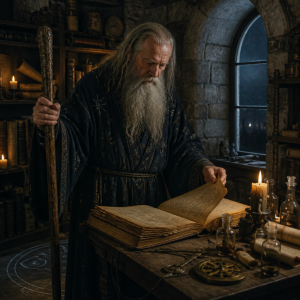
The archetype is its most famous and most contested idea. Carl Jung argued that recurring figures — the Shadow, the Great Mother, the trickster, the Wise Old Man (the mythic wizard) — are projections of a collective unconscious, structures built into the human mind itself. Joseph Campbell extended this into the monomyth, claiming all hero stories follow one journey of departure, initiation, and return. Both ideas are wildly influential and heavily criticized: skeptics note that you can find any pattern if you squint, and that “universal” myths are often less universal than advertised.
It has a periodic table. Folklorists built actual catalogues of the recurring units — Antti Aarne and Stith Thompson’s tale-type index and Thompson’s six-volume Motif-Index assign code numbers to every “magic flight,” “grateful dead,” and “theft of fire” in recorded folklore. Comparative mythology is the one branch of myth study with something like a laboratory apparatus.
Its case studies are the world’s most familiar monsters. Because its job is to find the shared figures, this category is where the universal beings live — the vampire, the mermaid, the giant, the unicorn, the undead. They have no nationality because every nation built its own.
The Universal Archetypes: Gods by Role, Not by Nation
Comparative mythology groups gods by function — the recurring divine job that different cultures fill with different faces. These are the roles that appear again and again across the world’s pantheons.
The Trickster
Trickster — the boundary-crosser who lies, shape-shifts, steals, and in the process drags culture into being. He is the most reliably universal figure in all mythology, and almost always morally double: creator and saboteur at once.
Loki — the Norse shapeshifter who fathers monsters, engineers a god’s death, and yet repeatedly saves the gods with his cunning. The trickster at his most dangerous.
Anansi — the West African spider who owns all stories because he outwitted the sky god for them. Carried to the Caribbean in the holds of slave ships, he became a folk hero of survival by wit.
Eshu — the Yoruba lord of the crossroads who decides which prayers reach which gods. A trickster as cosmic switchboard, proof that the role can be sacred rather than merely mischievous.
Coyote and Māui — the Native American culture-bringer and the Polynesian hero who fished up islands and snared the sun. Both steal benefits for humanity and both overreach. Sun Wukong, the Chinese Monkey King, is the same energy turned into a Buddhist parable.
The Sky-Father and the Earth-Mother
Zeus — the Greek sky-king whose very name descends from the Indo-European Dyeus, the “shining sky” — the same root that gives Latin Jupiter and Sanskrit Dyaus. The clearest single example of a god inherited across a whole language family.
Odin, Indra, Perun, and Anu — the Norse all-father, the Vedic thunderer, the Slavic storm-god, and the Mesopotamian sky-father. The celestial sovereign recurs everywhere, often wielding thunder and warring against a serpent.
Gaia, Cybele, and Pachamama — the Greek primordial earth, the Anatolian Great Mother, and the Andean earth-goddess still honored today. The Earth-Mother archetype is so widespread that Jung treated it as a foundation stone of the psyche.
The Storm-God Who Slays the Serpent
Marduk — the Babylonian champion who kills the chaos-dragon Tiamat and builds the world from her corpse. The template for a myth that echoes through Thor versus Jörmungandr, Indra versus the drought-serpent, and Zeus versus Typhon.
The Smith, the War-God, and the Sun
Hephaestus and Goibniu — the Greek and Irish divine smiths, often lamed or set apart, who forge the weapons of the gods. The craftsman-god is a quiet universal.
Ares, Tyr, Sekhmet, and Morrigan — the war-deity in four faces: Greek bloodlust, Norse lawful courage, Egyptian lioness of slaughter, and Irish crow of battlefield fate.
Ra, Helios, Surya, and Amaterasu — the sun as Egyptian creator, Greek charioteer, Hindu rider, and Japanese imperial ancestor. Almost every culture deifies the sun; few agree on its gender.
Creatures, Monsters, and Supernatural Beings
The world’s monsters cluster into a handful of recurring shapes — the kind of convergence that makes comparative mythologists suspect something deep is going on, whether in human fear or in misremembered fossils.
The Dragon and the Chaos-Serpent
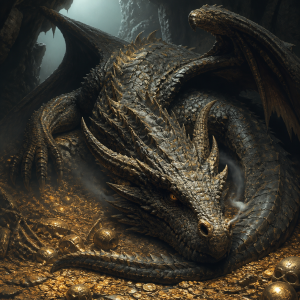
The dragon is the planet’s most stubborn monster, but it splits into two lineages. In the West it is chaos to be slain: Tiamat the Babylonian sea-mother, Jörmungandr the Norse world-serpent, Typhon and Python in Greece, Apep who swallows the Egyptian sun each night, the biblical Leviathan, and the gold-cursed Fafnir. In the East it inverts entirely: the Chinese and Hindu dragon is a benevolent water-bringer, the rain-deity Naga, the colossal Bahamut on which the world rests. Same body, opposite meaning.
The Undead
Every culture that buries its dead also fears them coming back. The undead are a near-universal anxiety: the blood-drinking vampire of the Slavic world and its cousins the strigoi, the Norse draugr who guards his grave-mound, the hopping Chinese jiangshi, the reanimated zombie, the spell-bound lich, the desert-haunting ghoul, the returning revenant, the wrapped mummy, and the bare skeleton that personifies death across medieval Europe. The ghost — the dead who linger without a body — may be the single most universal supernatural belief on Earth.
The Beings of the Water
The mermaid and her counterpart the merman surface on every coast, from the West African water-spirit Mami Wata to the shape-shifting Scottish selkie and the Slavic rusalka. The sea is the great unknown, and humanity keeps populating it with beautiful, dangerous half-people.
The Liminal and the Hard-to-Catch
Some recurring beings are exactly the ones an AI summary would miss. The psychopomp — the conductor of souls — is a role rather than a creature, filled by Hermes, Anubis, Charon, and the valkyrie alike. The shadow people are a modern-folklore echo of an ancient dread of dark watching figures. And the three hares — a single motif of three rabbits sharing three ears in a spinning circle — appears carved in Buddhist caves in China, in synagogues in Germany, and in churches in England, a genuine puzzle of diffusion with no agreed meaning. Add the giant, the monstrous giant animal, the Filipino self-segmenting manananggal, the unicorn, and the human practitioners — the witch and the wizard — and the global bestiary is nearly complete.
The Central Myths That Cross Every Border
The Flood
A god, disgusted with humanity, sends a deluge to wipe the slate clean and warns one righteous person to build a vessel and save the seeds of life. In Mesopotamia the survivor is Utnapishtim, warned by Enki, whose story the Gilgamesh epic preserves; in the Bible it is Noah; in India the fish-avatar Matsya tows the survivor’s boat to safety; in China the hero Yu the Great does not flee the flood but engineers it away by carving river channels. Over 500 cultures preserve a flood story. Why it matters: the flood is the clearest test case for the whole field — some versions are demonstrably copied (Noah from older Mesopotamian texts), others independent, and untangling which is which is comparative mythology in miniature.
The Theft of Fire and the Culture Hero
Civilization is almost never given freely; it is stolen or smuggled from the gods by a benefactor who pays for it. Prometheus steals fire for humanity and is chained to a rock to have his liver eaten daily; Māui snatches fire from the underworld; tricksters worldwide pull the same heist. Why it matters: the myth encodes a deep intuition that knowledge has a price and that progress is a transgression against the established order — the same anxiety that runs from Eden to the atom bomb.
The Dying God
A god of fertility or the sun descends into death and returns — or fails to — turning the agricultural year into a cosmic drama. Osiris is murdered and reassembled to rule the dead; Inanna descends to the underworld and hangs as a corpse before rising; Persephone shuttles between worlds to make the seasons; Adonis and Dionysus die and quicken again. Why it matters: Frazer made this the cornerstone of comparative mythology — and later scholars like Jonathan Z. Smith tore it down, arguing many “rising” gods only ever died. The debate is a perfect lesson in how seductive and how dangerous pattern-hunting can be.
The Cosmic Body
Creation by dismemberment: the world is built from the carved-up body of a primordial being. The Babylonian Marduk splits Tiamat into sky and sea; the Norse gods build the earth from the giant Ymir; the Chinese giant Pangu dies into mountains and rivers; the Vedic Purusha is sacrificed to become the cosmos and the social order; the Aztec earth is torn from the monster Cipactli. Why it matters: the recurrence is strong enough that Indo-European scholars reconstruct a shared ancestral myth of a primal sacrifice — one of the field’s boldest claims.
Cosmology and the Afterlife: The Architecture of the Beyond
The dead must go somewhere, and the world’s maps of the beyond rhyme with one another. Again and again the cosmos is built in three tiers — an upper world, the earth, and an underworld — strung along a vertical axis. That axis is often a world tree: the Norse Yggdrasil whose roots and branches bind nine realms together is the most complete example, but the axis mundi recurs as cosmic mountains and pillars worldwide. The fate of the cosmos is frequently spun by weaver-figures of destiny, like the Norse Norns.
The journey to the underworld — the katabasis — is itself a near-universal plot, from Inanna‘s descent to Orpheus‘s doomed rescue of his wife to the Maya Hero Twins’ trip into the realm of death. The destination is ruled by a sovereign of the dead: the Greek Hades in his subterranean kingdom (its prison-pit Tartarus reserved for the worst), the Mesopotamian Ereshkigal, the Hindu and Buddhist judge Yama, the Aztec underworld of Mictlan. And almost always there is a guide for the crossing — the psychopomp Anubis or Charon — and often a threshold-guardian like the hound Cerberus. What differs is the verdict: an Egyptian heart weighed against a feather, a Hindu soul recycled by its deeds, a Greek shade drifting in gray monotony. The architecture is shared; the theology of judgment is where each culture says what it truly believes about a life well lived.
How Global Mythology Connects to Other Traditions
The whole point of comparative mythology is connection, so the threads run everywhere. The Indo-European family — Greek, Roman, Norse, Celtic, Slavic, Persian, and Hindu — descends from a single reconstructed parent religion, which is why their sky-gods, thunder-serpent battles, and twin culture-heroes line up so neatly. That is inheritance.
The Ancient Near East shows diffusion in action: Sumerian and Mesopotamian myths of flood and descent flow into Jewish, Christian, and Islamic scripture, and the Egyptian cult of the dying Osiris colors the whole region’s idea of resurrection.
And then there are the parallels that defy easy explanation — the trickster of African, Native American, and Polynesian myth; the flood of Chinese and Aztec tradition; the world-tree of Norse and Mayan cosmology — peoples with no possible contact reaching for the same image. Those are the cases that keep the field alive.
Where to Start Reading
Begin with the scholars who built the discipline, reading them as brilliant and flawed in equal measure. James Frazer’s The Golden Bough (1890) is the founding text — gorgeous, encyclopedic, and wrong in many particulars, but the book that taught the West to see myth comparatively. Joseph Campbell’s The Hero with a Thousand Faces (1949) is the most influential single argument for a universal pattern, and its critics (start with the Big Think and Kiwi Hellenist essays online) are essential ballast.
For something more current and reliable, David Leeming’s The Oxford Companion to World Mythology is the best one-volume map, and Mircea Eliade’s The Myth of the Eternal Return unpacks sacred time and the axis mundi with rare depth. Readers who want the cutting edge of the “do these patterns go back to the Stone Age?” question should look at E. J. Michael Witzel’s ambitious The Origins of the World’s Mythologies. And for the raw materials, read the source-myths themselves — the Epic of Gilgamesh, Hesiod’s Theogony, the Prose Edda, and the Popol Vuh — and watch the patterns assemble in your own head.
Explore Global Mythology on Gods and Monsters
Gods and Monsters tracks 20 cross-cultural archetypes in the Global Mythology category — the universal figures that belong to every tradition at once.
Browse all Global Mythology entries →
Trickster · Dragon · Vampire · Mermaid · Merman · Ghost · Undead · Skeleton · Giant · Giant animal · Unicorn · Psychopomp · Angels · Demons · Demigods · Spirit · Witch · Wizard · Shadow People · Three hares
Frequently Asked Questions
What is comparative mythology?
Comparative mythology is the study of myths across different cultures to find shared themes, characters, and structures — and to explain why they recur. Rather than asking what one people believed, it asks why unconnected peoples keep producing similar tricksters, floods, dragons, and dying gods. Its major thinkers include James Frazer, Carl Jung, Georges Dumézil, Claude Lévi-Strauss, and Joseph Campbell, and its explanations range from shared psychology to historical borrowing to common linguistic ancestry.
Why do so many cultures have a flood myth?
More than 500 cultures preserve a story of a world-destroying flood, including the Mesopotamian Utnapishtim, the biblical Noah, the Hindu fish-rescue of Matsya, and the Chinese flood-tamer Yu the Great. Some are clearly related by descent — the Genesis flood derives from older Mesopotamian accounts — while others appear to be independent responses to a universal human reality: rivers flood, seas rise, and a culture’s whole world can drown. The pattern is real, but it has several different causes layered together rather than one.
What is the hero’s journey, and is it really universal?
The hero’s journey, or monomyth, is Joseph Campbell’s claim that heroic tales worldwide follow one arc — a call to adventure, a crossing into the unknown, trials and a supreme ordeal, and a return home transformed. It is enormously influential, especially in screenwriting. But many scholars argue it is not truly universal: Campbell achieved the pattern partly by selecting myths that fit and downplaying those that do not, and plenty of hero stories break the template entirely.
What is an archetype in mythology?
An archetype is a recurring character or image that appears across many unrelated mythologies — the trickster, the Great Mother, the psychopomp, the wise wizard, the shadow. Carl Jung proposed that archetypes are inherited structures of a “collective unconscious” shared by all humans, which is why they surface independently. The idea is influential but contested: critics note that broad archetypes are easy to find precisely because they are vague, and that local detail matters more than Jung allowed.
Why do dragons appear in cultures all over the world?
Dragons — large, powerful, often serpentine beasts — recur almost everywhere, but they split into two opposite meanings. Western traditions cast them as chaos to be slain, like Tiamat, Jörmungandr, and Leviathan; East Asian and South Asian traditions revere them as benevolent rain-bringers and water-spirits, like the naga. Theories for the global pattern include misidentified fossils, an innate primate fear of snakes and big predators, and the universal symbolic power of the serpent as a creature of both water and the underworld.
Are all the world’s mythologies secretly connected?
Partly, but not in the way pop culture suggests. Genuine connections come in three forms: inheritance (the Greek, Norse, and Hindu traditions share an Indo-European ancestor), diffusion (Mesopotamian flood myths flowing into Jewish and Christian scripture), and independent invention (the trickster arising separately on every continent). What is not well supported is the idea of one lost super-myth or ancient civilization seeding them all — the similarities are better explained by shared human minds confronting a shared world.