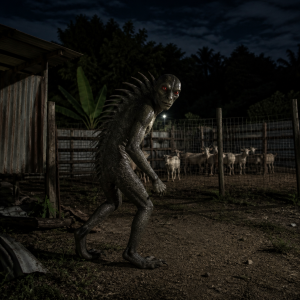
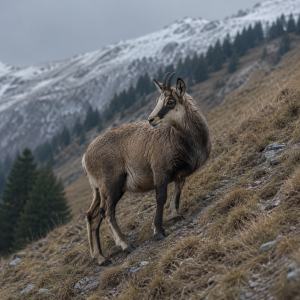
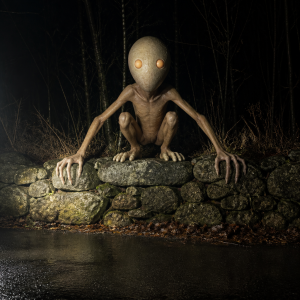
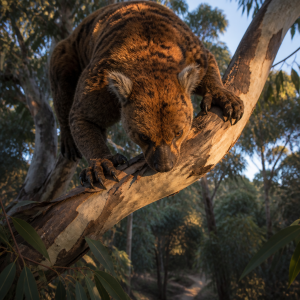
Cryptids: The Complete Guide to Creatures That Might Exist, Monsters That Probably Don't, and Why We Keep Looking
Cryptids occupy a strange middle ground that no other category in mythology does. They are not gods. They are not folktale archetypes retold for centuries around fires. They are creatures that someone claims to have seen — sometimes last week — and whose existence remains unproven but never quite disproven. The Loch Ness Monster, Bigfoot, the Chupacabra, the Yeti — these are not characters in sacred narratives. They are open cases.
What separates cryptids from the thousands of mythological creatures on this site is a single claim: these things are real, and they are still out there. A dragon belongs to myth. A Mokèlé-mbèmbé — a dinosaur-like creature reportedly living in the Congo Basin — belongs to cryptozoology. The line between the two is blurrier than either side admits: many cryptids are repackaged folklore, and many folkloric creatures were once reported as genuine sightings. But the distinction matters, because cryptids say something unique about the relationship between belief, landscape, and the human need for mystery.
The term “cryptozoology” — literally “the study of hidden animals” — was coined in the 1950s by Belgian-French zoologist Bernard Heuvelmans. But the practice is ancient. Every continent has produced creatures that locals insist are real, outsiders dismiss as fantasy, and a stubborn handful of investigators spend decades trying to document. What follows is a guide to the full scope of cryptid traditions worldwide, from famous headline-grabbers to regional creatures you’ve never heard of — and the deeper patterns that connect them all.
What Makes Cryptids Different from Mythological Creatures
They demand physical evidence. The Greek Chimera is a symbol. Nobody expects to find one. But the Yowie — Australia’s version of Bigfoot — comes with plaster footprint casts, blurry photographs, and heated arguments about whether thermal imaging footage from 2021 shows a large primate or a man in a coat. Cryptids exist in a space where belief and evidence are in constant tension. This makes them fundamentally different from the creatures of classical mythology: they are not sacred stories, they are contested claims.
They are intensely local. Every mythological tradition has its own monsters, but cryptids are tied to specific places with a precision that borders on the possessive. The Loveland Frogman belongs to Loveland, Ohio. The Beast of Bray Road belongs to Elkhorn, Wisconsin. The Flatwoods Monster belongs to Braxton County, West Virginia. Remove the location and you remove the creature’s identity. This is the opposite of universal myths — it’s hyper-local storytelling.
They evolve in real time. Norse mythology was fixed when Snorri Sturluson wrote it down in the 13th century. But the Mothman legend has been continuously revised since 1966, absorbing new sightings, new theories, and new media adaptations with each decade. Cryptids are living folklore — they mutate with the culture that sustains them.
They blur the line between folklore and zoology. Some “cryptids” turned out to be real. The gorilla was a cryptid to European science until 1847. The okapi — a giraffe relative in the Congo — was dismissed as a native fantasy until 1901. The giant squid, long conflated with the Kraken, was not photographed alive until 2004. This track record — small but real — is what keeps cryptozoology alive. If the giant squid was real, why not the Ogopogo?
They are often rooted in Indigenous traditions outsiders ignored. Many of the world’s most famous cryptids are indigenous creatures repackaged for Western audiences. The Wendigo is an Algonquian spiritual concept. The Bunyip is an Aboriginal water spirit. The Thunderbird is sacred across dozens of Native American nations. When these beings get filed under “cryptozoology,” something important is lost — and something revealing is gained about how Western culture processes indigenous knowledge.
The Great Apes That Aren’t There (or Are They?)
Bigfoot and the North American Tradition
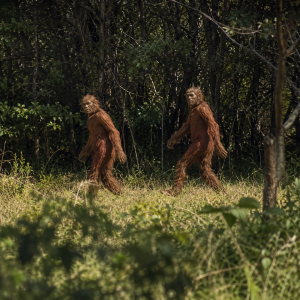
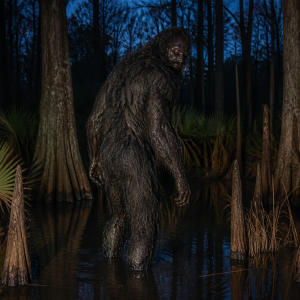
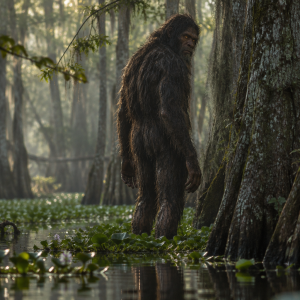
Bigfoot — also called Sasquatch, from the Halkomelem word sasq’ets — is the world’s most famous cryptid and the anchor of North American cryptozoology. Reports describe a bipedal, ape-like creature standing 7–10 feet tall, covered in dark hair, and leaving massive footprints in the forests of the Pacific Northwest. The 1967 Patterson-Gimlin film, shot at Bluff Creek, California, remains the single most analyzed piece of cryptid evidence ever produced — and after nearly sixty years, neither believers nor debunkers have settled the argument.
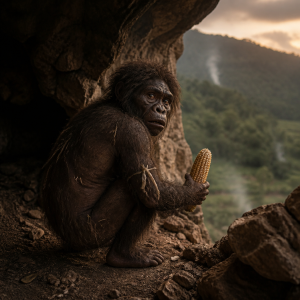
But Bigfoot is only the most famous of North America’s mystery primates. The Grassman haunts the forests of Ohio. The Mono Grande is reported from the dense jungles of South America. The continent’s fascination with undiscovered great apes predates the name “Bigfoot” by centuries — nearly every Native American nation in the Pacific Northwest has traditions of giant, hairy forest beings, and the Wild man archetype stretches back to medieval European folklore.
The Himalayan Yeti
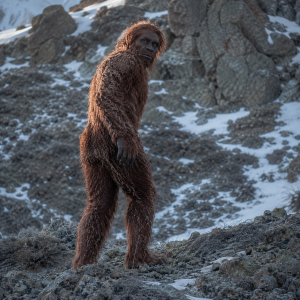
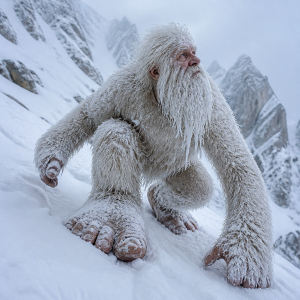
The Yeti predates Bigfoot in the Western imagination by decades. Himalayan peoples had described the yeh-teh (“rock bear”) long before British mountaineers brought the story home in the early 20th century. The 1951 Shipton photograph of a massive footprint in the Everest snow launched the Yeti into global fame, but the creature’s real significance lies in its deep roots in Himalayan mythology — where it is not merely an undiscovered animal but a being with spiritual dimensions, a guardian of mountain places humans were never meant to reach.
The Global Pattern
The Almas of Central Asia. The Yowie of Australia. The Agogwe of East Africa. Nearly every continent has produced reports of large, bipedal, hair-covered beings that live just beyond the edge of the known. Some researchers argue this reflects a genuine undiscovered primate — perhaps a surviving population of Gigantopithecus, a ten-foot ape that went extinct roughly 100,000 years ago. Skeptics counter that the pattern says more about human psychology than zoology: we keep imagining wild versions of ourselves in the places that frighten us most.
Lake Monsters and Sea Serpents
The Loch Ness Monster
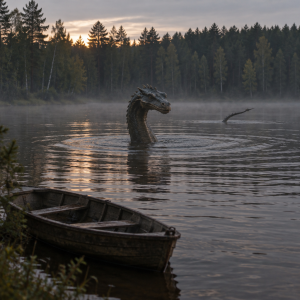
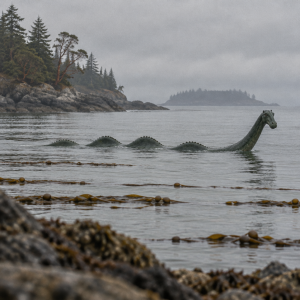
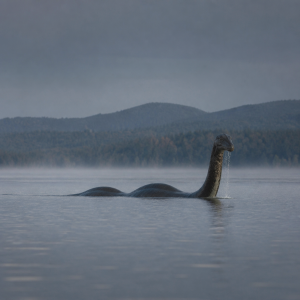
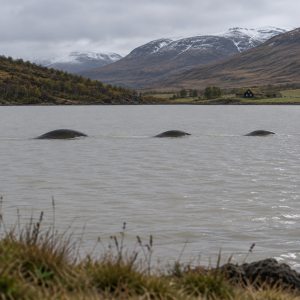
The Loch Ness Monster is arguably the most iconic cryptid on Earth. “Nessie” entered global consciousness in 1933 when a couple reported seeing a massive creature crossing the road near the loch, and the legend has sustained itself ever since through a steady supply of photographs, sonar readings, and tourism revenue. Loch Ness is deep (over 700 feet), dark with peat, and cold — an ideal environment for mystery. The most common explanation for the sightings is misidentification of known animals (seals, sturgeon, floating logs), but the romantic appeal of a plesiosaur surviving in a Scottish lake has proven remarkably durable.
A World Full of Lake Monsters
Nessie is far from alone. Ogopogo has been reported in Canada’s Lake Okanagan since at least the 19th century, drawing on Syilx First Nation traditions of a creature called N’ha-a-itk. Nahuelito lurks in Argentina’s Nahuel Huapi Lake — a body of water that, like Loch Ness, is deep, cold, and glacially carved. Raystown Ray inhabits a reservoir in central Pennsylvania. Poubi Lai is a dragon-python reported from the lakes of Manipur in northeastern India, connecting cryptozoology to Meitei mythology.
The pattern is striking: deep, dark, cold lakes all over the world produce remarkably similar creature reports. This is either evidence of a globally distributed unknown species or — more likely — evidence that deep, dark water triggers a specific kind of human imagination.
Sea Serpents and Marine Cryptids
Before lake monsters, there were sea serpents. The Kraken of Scandinavian tradition was once dismissed as pure myth before the giant squid proved that colossal cephalopods were real. The Sea monk — a humanoid fish reported off Denmark in the 16th century — may have been a misidentified angel shark or giant squid. The Lusca of the Caribbean is described as a massive octopus-like creature inhabiting blue holes in the Bahamas. And the Inkanyamba of South Africa is a colossal serpent associated with storms and waterfalls, blending cryptid sighting with Zulu spiritual tradition.
Winged Terrors
Mothman
The Mothman appeared in Point Pleasant, West Virginia between November 1966 and December 1967. Witnesses described a grey, winged humanoid with enormous red eyes, standing over six feet tall. More than 100 sightings were reported in just over a year. Then, on December 15, 1967, the Silver Bridge collapsed, killing 46 people — and the Mothman was never reliably seen in Point Pleasant again. The connection between the creature and the disaster was never logical, but it was irresistible. John Keel’s 1975 book The Mothman Prophecies cemented the creature as America’s most famous omen of disaster.
Other Winged Cryptids
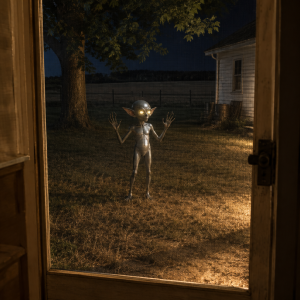
The Owlman of Cornwall, England is sometimes called Britain’s Mothman — a large, owl-like humanoid first reported near Mawnan church in 1976. The Flatwoods Monster of West Virginia (1952) combines cryptid and UFO traditions: witnesses described a 10-foot figure with a glowing face and a spade-shaped head hovering above the ground. The Thunderbird straddles the line between sacred Native American mythology and modern cryptid reports — enormous birds with wingspans exceeding 20 feet have been reported across the American Southwest and Midwest, echoing the thunderbird traditions of the Lakota, Ojibwe, and many other nations.
Canids, Dogmen, and the Beast Next Door
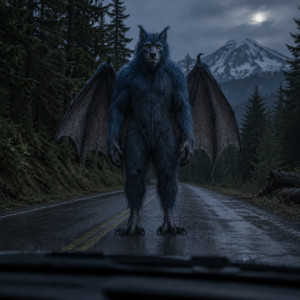
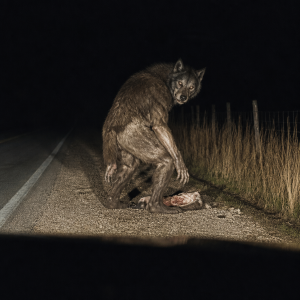
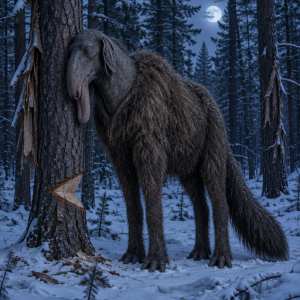
The Beast of Bray Road — a werewolf-like creature reported near Elkhorn, Wisconsin since 1989 — launched an entire subgenre of American cryptozoology: the dogman. The Michigan Dogman has been sighted since at least the 1880s, with a famous (and likely fabricated) audio recording in 1987. These creatures are described as wolf-like but bipedal, with human-proportioned torsos and canine heads.
The deeper history here connects to the Werewolf traditions that span European folklore and to real predators that terrorized communities. The Beast of Gévaudan killed between 100 and 300 people in southern France between 1764 and 1767 — one of the few cryptid-adjacent cases where the body count was indisputably real, even if the creature’s identity (wolf, hyena, or something stranger) remains debated.
British Big Cats — also called Alien Big Cats or ABCs — represent a quieter but persistent tradition: large, dark felines reported across the English and Scottish countryside, far from any known wild population. The most famous, the Beast of Bodmin Moor, has been reported since the 1970s. The leading theory — escaped or released exotic pets — is plausible but unconfirmed.
Cryptids of Africa
Africa’s cryptid traditions are among the most compelling because they often sit at the intersection of indigenous ecological knowledge and Western dismissal. The Mokèlé-mbèmbé — a sauropod-like creature reportedly living in the rivers and swamps of the Congo Basin — has been the subject of multiple Western expeditions since the early 20th century. Local communities describe it matter-of-factly, as a dangerous but known river animal. Whether it represents a surviving dinosaur (almost certainly not), an unknown species of large reptile, or a culturally sustained misidentification of known animals, the Mokèlé-mbèmbé illustrates how seriously indigenous knowledge gets taken only when it conforms to Western fantasies.
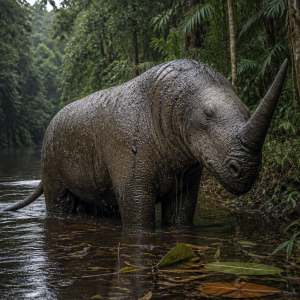
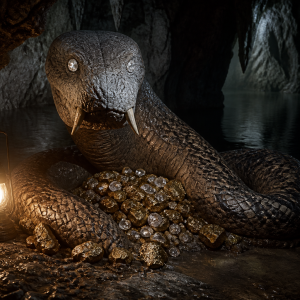
The Nandi Bear of Kenya is described as a large, aggressive, hyena-like creature — some researchers have speculated it could be a surviving chalicothere, a prehistoric mammal. The Mngwa of Tanzania is a grey, tabby-striped big cat that East African communities have reported for generations. The Ninki Nanka of West Africa is a dragon-like river creature from Gambian tradition that resists easy classification — it belongs to both folklore and living belief simultaneously. The Grootslang of South Africa is said to be a primordial creature, older than the separation of elephants and serpents, lurking in deep caves connected to the ocean. And the Popobawa of Zanzibar is a shapeshifting entity whose periodic “flaps” of sightings have been studied by anthropologists as expressions of social anxiety during times of political upheaval.
Cryptids of South America and Patagonia
South America’s cryptid roster reflects the continent’s extraordinary biodiversity — the Amazon and Patagonia are among the last places on Earth where genuinely new large species could plausibly hide. The Mapinguari of Brazil is described as a large, foul-smelling, one-eyed creature covered in red fur. Some researchers have tentatively linked it to Megatherium, the giant ground sloth that went extinct roughly 10,000 years ago — or, less dramatically, to misidentified spectacled bears. Nahuelito patrols the depths of Argentinian lakes. The Mono Grande represents South America’s contribution to the global mystery primate tradition — a large, bipedal ape reported from Venezuela and Colombia.
American Fearsome Critters and Regional Oddities
Not all cryptids are serious. The United States has a rich tradition of deliberately absurd creatures invented by lumberjacks, hunters, and small-town jokesters — beings that blur the line between cryptid, tall tale, and folk art.
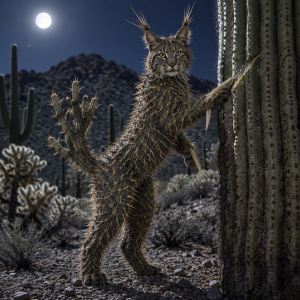
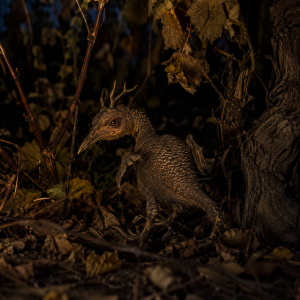
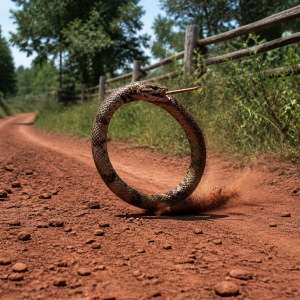
The Jackalope — an antlered jackrabbit — began as a taxidermy prank in Douglas, Wyoming in the 1930s and became a genuine piece of American folklore, complete with postcards, hunting licenses, and roadside statues. The Hodag of Rhinelander, Wisconsin was a deliberate hoax by timber cruiser Eugene Shepard in 1893, but the town adopted it as a beloved mascot. The Hidebehind — a creature that is always directly behind you and therefore impossible to see — is a perfect piece of lumberjack absurdism. The Hoop snake bites its own tail and rolls downhill like a wheel. The Augerino bores through the earth, draining water sources. The Squonk of Pennsylvania is so ugly it weeps continuously and dissolves into a puddle of tears when captured.
These “fearsome critters” remind us that cryptozoology has always had a playful side — and that the line between a creature people believe in and a creature people enjoy pretending to believe in is often the most interesting boundary in folklore.
The Skvader of Sweden plays a similar role in Scandinavian tradition — a winged hare that is both obviously fake and proudly displayed in a museum.
The Borderlands: Where Folklore Becomes Cryptozoology
Some of the most fascinating cryptids are creatures that began as genuine folklore — part of a living mythological tradition — and got repurposed as “sightings” by the modern cryptozoological movement.
The Wendigo is perhaps the clearest example. In Algonquian tradition, the Wendigo is not a hidden animal but a spiritual concept — a being that embodies the horror of cannibalism and the dangers of isolation during brutal winters. It was never meant to be “found.” But modern popular culture has transformed it into a cryptid: a physical monster lurking in Canadian forests. The same transformation has happened to the Wampus cat of Appalachian folklore (rooted in Cherokee tradition) and the Bunyip of Aboriginal mythology (a water spirit with deep cultural significance that gets reduced to “Australia’s Loch Ness Monster”).
Spring-heeled Jack represents a different kind of borderland — a creature from Victorian urban legend, first reported in London in 1837, that combines folklore, mass hysteria, and possibly deliberate hoaxing. He leaps impossibly high, breathes blue flame, and terrifies women in dark lanes. He’s not mythological, not quite a cryptid, and not fully explained. He simply exists in the gap.
The Central Mystery: Why Do Cryptids Persist?
Several patterns emerge when you survey cryptids globally rather than one at a time.
Cryptids fill ecological niches in the imagination. Deep lakes produce long-necked plesiosaurs. Dense forests produce bipedal apes. Open skies produce enormous birds. The creature maps to the landscape — and the landscape maps to human anxiety about what it might conceal.
Cryptids preserve pre-modern knowledge. Many of the world’s most enduring cryptids — the Bunyip, the Thunderbird, the Mokèlé-mbèmbé — carry indigenous knowledge about environments and ecosystems that Western science was slow to study. The question is not always “does this creature exist?” but “what does this tradition know that we haven’t listened to?”
Cryptids serve communities. Point Pleasant has a Mothman museum, statue, and annual festival. Inverness has a Nessie industry worth millions. Cryptids give small towns identity, revenue, and a story that belongs entirely to them. This social function is often more important than the creature’s ontological status.
Cryptids are the mythology of the present. Traditional mythologies are closed canons — their stories are fixed, even if their interpretations evolve. Cryptids are open canons. New sightings happen. New evidence appears. New creatures emerge (the Chupacabra was first reported in 1995). In a secular age that has largely abandoned gods and spirits, cryptids are the supernatural beings we are still willing to half-believe in.
How Cryptids Connect to Other Traditions
Cryptids don’t exist in isolation from the mythological traditions covered elsewhere on this site — they are deeply entangled with them.
The Kraken connects to Norse mythology and its tradition of world-threatening sea creatures. The Thunderbird belongs simultaneously to Native American mythology and to modern cryptid sighting reports. The Tatzelwurm — a stubby, cat-faced serpent reported in the Alps — connects to Alpine mythology and the European dragon tradition. The Tsuchinoko — a fat, short snake that allegedly chirps and jumps — is both a creature of Japanese mythology and a modern cryptid with bounties on its head from several Japanese municipalities.
Many entries covered under specific mythological traditions on this site — the Kelpie of Scottish mythology, the Nuckelavee of Orkney, the Aswang of the Philippines — function as cryptids in their home regions, where people still report encounters and take their existence seriously as part of a living tradition.
Where to Start Reading
For a serious overview of the field, Bernard Heuvelmans’s On the Track of Unknown Animals (1955) remains the foundational text of cryptozoology, though its scientific claims have aged poorly. Loren Coleman and Jerome Clark’s Cryptozoology A to Z (1999) is a useful reference. For a more critical and anthropological perspective, Daniel Loxton and Donald Prothero’s Abominable Science! (2013) examines the major cryptids through the lens of skeptical inquiry while taking the cultural phenomenon seriously.
For American regional cryptids, Linda Godfrey’s work on the Beast of Bray Road and related dogman sightings is thorough and surprisingly even-handed. John Keel’s The Mothman Prophecies (1975) is essential reading not because it’s accurate, but because it defined how Americans think about the relationship between cryptid sightings and disaster.
Explore Cryptids on Gods and Monsters
Gods and Monsters covers 50+ cryptid and cryptid-adjacent entries spanning every inhabited continent — from headline-grabbing icons to regional creatures you won’t find covered anywhere else at this depth.
North American cryptids: Bigfoot · Mothman · Jersey Devil · Flatwoods Monster · Beast of Bray Road · Michigan Dogman · Loveland Frogman · Pope Lick Monster · Grassman · Wendigo · Thunderbird · Piasa · Wampus cat · Ogopogo · Raystown Ray
Fearsome critters and tall-tale creatures: Jackalope · Hodag · Hidebehind · Hoop snake · Augerino · Squonk · Skvader
Lake monsters and sea creatures: Loch Ness Monster · Nahuelito · Kraken · Sea monk · Lusca · Inkanyamba · Poubi Lai
African cryptids: Mokèlé-mbèmbé · Nandi Bear · Mngwa · Ninki Nanka · Grootslang · Agogwe · Popobawa
South American cryptids: Chupacabra · Mapinguari · Mono Grande
Asian and Australasian cryptids: Yeti · Almas · Tsuchinoko · Yowie · Bunyip
European cryptids: Spring-heeled Jack · Beast of Gévaudan · British Big Cats · Tatzelwurm · Owlman
Other: Reptilian humanoid · Shadow People · Wild man · Mugwump · Onza
Frequently Asked Questions
What is a cryptid?
A cryptid is a creature whose existence has been reported by eyewitnesses but never confirmed by mainstream science. The term comes from “cryptozoology,” coined by Bernard Heuvelmans in the 1950s. Famous examples include Bigfoot, the Loch Ness Monster, and the Yeti. Cryptids differ from mythological creatures in that someone is actively claiming they are real, living animals — not symbols, spirits, or figures in ancient stories. The boundary is fuzzy, though: many creatures that started as folklore (like the Wendigo) have been reframed as cryptids by modern popular culture.
Has any cryptid ever been proven real?
Several animals once dismissed as cryptids were eventually confirmed by science. The giant squid — long associated with the Kraken legend — was not photographed alive until 2004. The mountain gorilla was unknown to Western science until 1902. The okapi, the Komodo dragon, and the coelacanth (a “living fossil” fish thought extinct for 65 million years) were all considered mythical before specimens were collected. These discoveries keep the door open for cryptozoologists, though none of the major modern cryptids like Bigfoot or Nessie have produced comparable physical evidence.
What is the most famous cryptid?
Bigfoot and the Loch Ness Monster compete for the title. Bigfoot dominates in North America, sustained by the Patterson-Gimlin film and thousands of reported sightings across the Pacific Northwest. The Loch Ness Monster has greater global recognition, partly because “Nessie” has been a media sensation since the 1930s. The Mothman and Chupacabra are close behind, each anchoring their own robust traditions of sightings and cultural significance.
Are cryptids the same as mythological creatures?
Not exactly, though the categories overlap significantly. Mythological creatures belong to established narrative traditions — they are characters in sacred or cultural stories. Cryptids are defined by claimed sightings and disputed evidence. However, many cryptids have roots in mythology: the Bunyip comes from Aboriginal mythology, the Thunderbird from Native American traditions, and the Tsuchinoko from Japanese folklore. The key difference is the truth claim: nobody expects to discover a Griffin, but people are still actively searching for Bigfoot.
Why does every culture seem to have its own Bigfoot?
Nearly every continent has produced reports of large, bipedal, hair-covered beings: Bigfoot in North America, the Yeti in the Himalayas, the Yowie in Australia, the Almas in Central Asia, the Agogwe in East Africa, and the Mono Grande in South America. Some researchers argue this pattern reflects a real undiscovered primate or a surviving relative of Gigantopithecus. Skeptics suggest it reveals something about human psychology instead — we instinctively project a “wild twin” of ourselves into the landscapes that feel most untamed and mysterious.
What is the difference between cryptids and urban legends?
Urban legends are narrative stories — they have plots, morals, and recognizable structures (“a friend of a friend told me…”). Cryptids are claimed creatures — they are defined by sightings, physical descriptions, and disputed evidence rather than by story arcs. However, the two overlap. The Mothman has become both a cryptid (something people claim to have seen) and an urban legend (a narrative linking the creature to the Silver Bridge collapse). Spring-heeled Jack is similarly both: a creature with specific physical descriptions from alleged witnesses, and a character in Victorian penny dreadfuls and moral panics.
Suggested Further Reading
- Daniel Loxton and Donald Prothero, Abominable Science! Origins of the Yeti, Nessie, and Other Famous Cryptids (2013, Columbia University Press) — The best critical examination of the major cryptids, taking both the evidence and the cultural phenomenon seriously without credulity.
- J. W. Ocker, The United States of Cryptids: A Tour of American Myths and Monsters (2022, Quirk Books) — Edgar Award–winning travel writer covers cryptids in all 50 states, with a focus on how communities adopt and celebrate their local monsters. Entertaining and well-researched.
- Jason Offutt, Chasing North American Monsters: A Guide to Over 250 Creatures from Greenland to Guatemala (2025, Llewellyn) — The most recent comprehensive field guide, covering every U.S. state and territory plus 23 countries. Foreword by Loren Coleman. Good on lesser-known regional creatures.