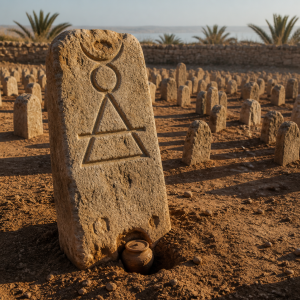
In the harsh, wind-scoured lands that curve along North Africa’s spine, memory lives in the language of the stones and the old women’s songs. Berber—or, as they call themselves, Amazigh—mythology is less a museum of gods than a living vein running under Morocco, Algeria, Libya, and beyond, coloring daily ritual and the long struggle for identity. What sets it apart isn’t the scale of its pantheon or the spread of its tales, but the way it endures—weathered, shifting, half-hidden beneath centuries of conquest and conversion, yet unmistakably alive.
Distinguishing Characteristics
Amazigh mythology breathes in fragments. The oldest stories are not written but woven, carried by traders, passed down around fires, whispered by mothers, sung in ululations at the birth of a child or the blessing of a field. Here, myth is geography: every mountain, river, or ruined watchtower carries the ghost of a god or the echo of a deed. Unlike the strict lineages of Olympians or the neat hierarchies of Norse gods, the Amazigh world is a mosaic—syncretic, patchworked by Phoenician, Roman, and Arab overlays, yet pulsing with roots that reach back to the Neolithic.
Water matters here. The Maghreb’s arid highlands and shifting sands turn rain into miracle and drought into epic. Unsurprisingly, many Amazigh stories swirl around storms, rivers, the gift of rain, and the dangers of thirst. Identity is another undercurrent: Amazigh mythos underpins an ancient sense of “free people,” resistant to empires and conversion, guardians of language and land.
Major Gods
The pantheon is not fixed. Some names flicker across carvings and coins, others only in half-remembered invocations. Yet a few stand out:
Amun: Before his adoption as king of Egyptian gods, Amun was honored in Siwa Oasis (now in Egypt but long Berber) as a ram-headed god of hidden things, prophecy, and kingship. Alexander the Great sought his oracle, and Amazigh chiefs claimed descent from him.
Tanit: Often linked with the Phoenician goddess of Carthage, Tanit’s worship ran deep through Berber lands. She is a moon goddess, patron of fertility and life, sometimes depicted with outstretched arms and a crescent, always linked to sacred springs and palm groves.
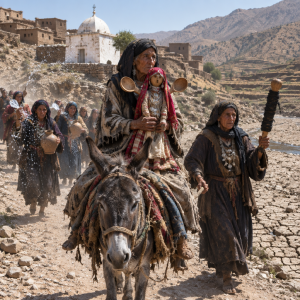
Anzar: The rain-bringer, known especially in Kabyle folklore. Tales say Anzar fell in love with a mortal woman; her tears—or his—brought the first rain. Even today, in times of drought, women sing to Anzar, coaxing clouds with ritual and song.
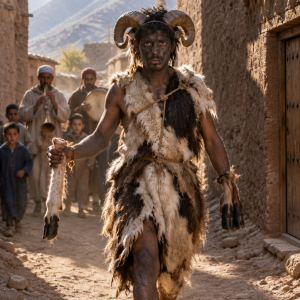
Gurzil: A war god, depicted as a bull or as a warrior bearing a bull’s head. Revered in Roman times by Berber tribes resisting foreign rule, Gurzil became a symbol of revolt and untamed force, later demonized by Christian and Islamic chroniclers.
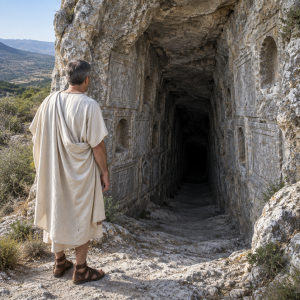
Ifri (or Ifri n Duniya): An earth and fertility goddess, sometimes seen as a guardian of the hearth or a spirit of the wild, associated with caves and the generative powers of nature.
Other names—Ammonet, Sufax, Tin Hinan—drift between myth and legend, sometimes more ancestor than god, but always tethered to place.
Major Mythological Beasts
Unlike the menageries of Greece or Egypt, Berber myth deals in shadows and transformations. The most famous are:
Aytar: A shape-shifting spirit or monstrous beast, sometimes described as a wolf, sometimes as a jackal, fox, or lion. It embodies wilderness, chaos, and the unpredictable dangers beyond the village.
Genii and Djinn: While these entities are pan-North African and Islamic, Berber tales add local color—djinn that haunt specific caves, springs, or stones; spirits that must be appeased before plowing or building.
The Flying Serpent (Aherman/Ahermam): Sometimes described in ancient accounts, this creature blurs the line between monster and spirit—said to bring storms, disease, or even blessings, depending on its mood and how it’s treated.
Major Mythological Tales
Most tales arrive in fragments—epic cycles are rare, but motifs are powerful.
The Tale of Anzar and the First Rain: In one version, Anzar, god of rain, woos a beautiful woman who refuses his love. In his grief, he withholds the rain until she relents; when she finally marries him, he brings water to the earth. This story still underpins rain-calling rituals in Kabyle and other Berber communities.
Tin Hinan, Mother of the Tuareg: Half-history, half-myth, Tin Hinan is said to have crossed the Sahara, becoming the ancestress and queen of the Tuareg. Her tomb, discovered in the Hoggar Mountains, stands as a bridge between legend and reality—a reminder of the Amazigh belief in mighty women, lost kingdoms, and the endurance of lineage.
Sufax and the Founding of Tangier: Sufax, son of Heracles (in some stories) and Tinge (the Berber earth goddess), is credited with founding Tangier and even parts of Mauritania. This tale merges Greek, Berber, and Roman roots, showing just how porous the boundaries of Amazigh myth can be.
Stories of the Djinn: In countless tales, djinn steal children, bless fields, or mislead travelers. These stories serve as both caution and comfort, making the invisible world tangible and offering explanations for misfortune and luck.
Impact on Modern Civilization
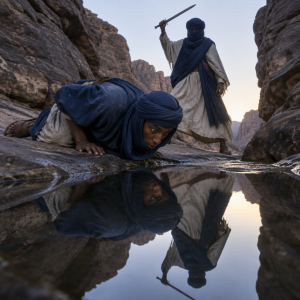
The Amazigh story is one of survival. Even after waves of conquest—Roman, Vandal, Arab, French—the old stories cling on. The famous blue-clad Tuareg, the tattoos of mountain women, the annual rain-making ceremonies in remote villages: all pulse with echoes of the old gods and spirits.
In language, symbols, and ritual, Berber mythology has become a badge of resistance. The trident-like “Yaz” symbol, seen everywhere from flags to graffiti, stands for “free man”—a concept older than Islam or France, rooted in mythic memory. Amazigh revival movements invoke Tanit and Anzar not as curiosities but as living ancestors.
Elements of Amazigh myth have crept into global culture, if you know where to look. The image of the fierce, desert-dwelling warrior. Stories of oracles and lost queens. The very idea that identity can survive by going underground, by hiding in stories and in stones.
Today, as the Berber language is reclaimed in schools and public life, the mythology follows. Not as relic, but as raw material: a wellspring for poets, rebels, and anyone who hears the wind off the Atlas and senses there’s still magic left in the land.
Recommended Reading
The Berbers: The Peoples of Africa by Michael Brett and Elizabeth Fentress — An authoritative, accessible survey of Amazigh history and myth, tracing roots from prehistory to the present.
Amazigh Arts in Morocco: Women Shaping Berber Identity by Cynthia Becker — Explores myth, symbolism, and ritual in Amazigh life, showing how story and identity endure in everyday art and ceremony.
Amazigh Folk Tales by Tahir Shah — A modern collection of Berber folktales from across North Africa, with giants, djinn, rain‑spirits, and ancestral women woven into oral tradition