Distinguishing Characteristics of Bengali Mythology
Bengali mythology, rooted in the fertile plains of the Ganges and Brahmaputra rivers, intertwines Hindu, indigenous, and folk traditions, creating a unique cultural synthesis. This mythology is characterized by its vibrant storytelling, extensive pantheon of gods and goddesses, and a deep connection to nature and the cosmos. The mythology often explores themes of creation, destruction, love, valor, and the eternal battle between good and evil, reflecting the complexity of human nature and the universe.
Major Gods
Among the pantheon, several deities stand out for their significance in Bengali mythology:
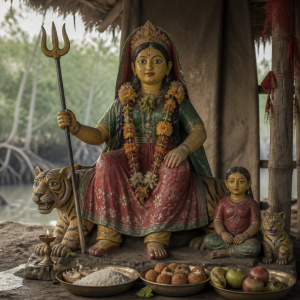
- Durga: Revered as the supreme mother goddess, Durga embodies power and protection. She is celebrated for her victory over the buffalo demon Mahishasura, symbolizing the triumph of good over evil.
- Kali: Durga’s fierce form, Kali, represents destruction and liberation. She is venerated for her role in annihilating demons and her capacity to transcend time.
- Shiva: As a principal deity in Hinduism, Shiva’s presence in Bengali mythology is profound, embodying destruction and regeneration, asceticism, and the cosmic dance of creation.
- Krishna: An incarnation of Vishnu, Krishna’s tales of love, wisdom, and valor are central to Bengali devotional practices and folklore.
Major Mythological Beasts
Bengali mythology is also home to a host of mythological beasts and creatures, each embodying various aspects of the human psyche and natural forces:
- Makara: A sea creature that represents water’s chaos and fertility, often associated with the goddess Ganga and the god Varuna.
- Nagas: Serpentine beings that symbolize water, fertility, and the underworld, often depicted as protectors of treasures and sacred sites.
Major Mythological Tales
The tales of Bengali mythology are vast and varied, but a few stand out for their cultural impact:
- The Mahabharata and Ramayana: Although not unique to Bengal, these epic tales have been adapted into Bengali literature and folklore, reflecting the universal themes of duty, righteousness, and the complexities of dharma.
- The Chandi Mangal: A collection of poems celebrating the goddess Durga, this tale blends myth, history, and the socio-cultural context of Bengal, illustrating the goddess’s power and the devotion of her followers.
Impact on Modern Civilization
Bengali mythology has significantly impacted modern civilization through literature, art, festivals, and philosophical thought. The Durga Puja festival, a vibrant and elaborate celebration of the goddess Durga’s victory, exemplifies how mythology influences contemporary life, fostering community unity and spiritual reflection. Additionally, the themes and characters of Bengali mythology have inspired countless works of literature and art, offering insights into human nature, ethical dilemmas, and the quest for meaning in an ever-changing world.